

Rooted in the deep past, Alaska’s mushing culture rolls on
When the Iditarod teams bound out of Willow this month, their odyssey across the Alaskan wilderness will be more than a race. Rising and falling across a frozen landscape – stitching together far-flung rural communities as they go – they will help preserve an arctic sled dog culture that stretches back thousands of years.
But uncertainty hangs over the scene. Across Alaska, keeping dog teams is getting harder as costs rise and the climate warms. Rural outmigration and modern snowmachines have also made mushing obsolete for some. The result is fewer teams on the land, and a sharp decrease in Iditarod competitors.
Yet, Alaska’s “last great race” persists. And so does a dog sled culture first shaped by Alaska’s Indigenous peoples. It lives on in dozens of races, from fun runs to sprints to long hauls of hundreds of miles. It also survives in the working dogs still running traplines, visiting between villages, recreating, and, at Denali National Park, hauling scientists to remote sites. It’s become a year-round tourism staple, too, with mushers from Juneau to the Arctic offering tours.
Scientists are also in the mix, probing DNA and digging into ancient sediments to understand when people and dogs first worked together, thought to be at least 10,000 years ago. Through it all, the next generation still learns to mush. They may be fewer, but their dedication, centered around putting the dogs first, is as strong as ever.
How far back does it go?
The Iditarod’s own epic history stretches back 53 years and is packed with thrilling moments and legendary athletes – both canine and human. They include Joe Redington, Sr, who created the race because even a half-century ago he feared that mushing was dying. And the sprint champion George Attla, the “Huslia hustler” from a remote Athabascan village who dazzled fans with his drive, despite a kneecap fused since childhood. And Susan Butcher, who dominated racing for 10 years with Granite and other high-energy huskies.
Thrilling Iditarod moments include the 1978 finish, when Dick Mackey and Rick Swenson arrived in Nome at the same time, their teams kicking up snow as they sprinted down Front Street. Mackey’s crew won the 1,000-mile race by just one second. There’s heartbreak, too. In 1985, a moose entangled in Butcher’s team killed two dogs and injured others before being shot, forcing Butcher to scratch from her lead. And there’s grit. In 2024, Dallas Seavey received a time penalty for inadequately cleaning an aggressive moose that he shot, yet he still won a record sixth race.
It’s remarkable history. But the Iditarod – and all modern racing – is only the blink of a husky’s eye in the much longer story of people and sled dogs, which yawns back through millennia.
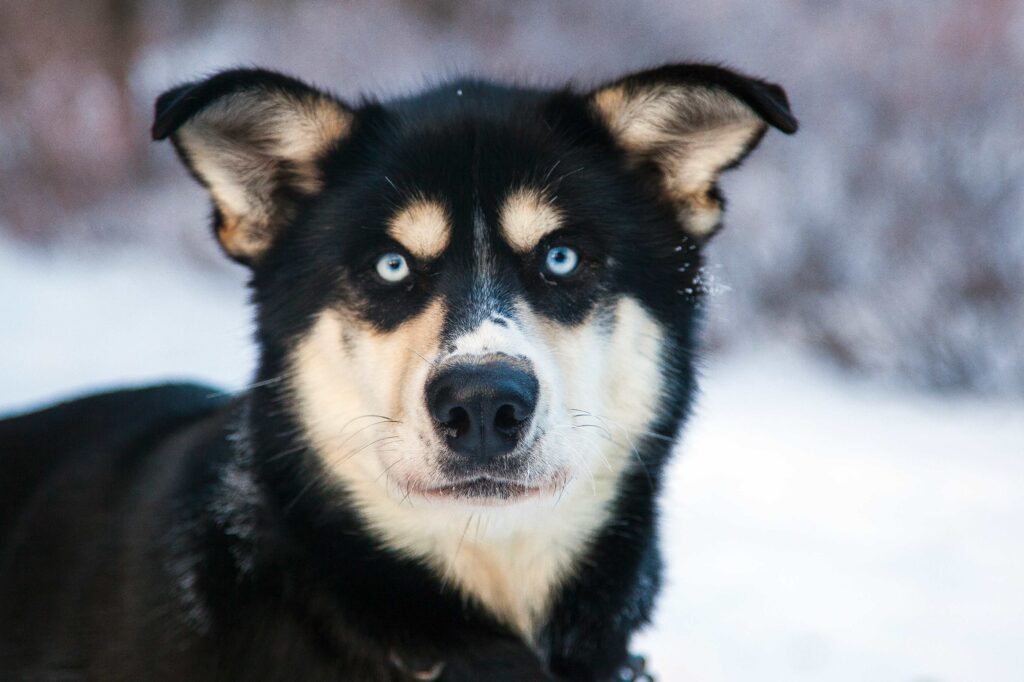
“Sled dogs changed the lives of Alaska Natives, explorers, prospectors, and settlers,” says Alaska historian Helen Hegener.
Hegener’s 2024 History of Sled Dogs in North America explores the story in over 400 pages of essays, photos, and artwork. Like mushing itself, her book is a team effort pulled along by what she calls “my 60 years’ worth of friends” in dog sledding. They include giants like Thom Swan and Joe May. Each clips into a piece of mushing history in Hegener’s book.
Hegener came to mushing in 1966, when as a kid she watched Joe Redington, Jr, win the Fur Rondy in Anchorage. Redington became her childhood hero, and in 1973 she volunteered at the first Iditarod. For decades, she’s written books and reported on races across Alaska. When she lived remote north of Wasilla, she drove her own team to haul water and firewood, as Alaskans have for uncountable generations. That deep history is where her book begins.
“No one really knows,” Hegener says, “but I’m pretty convinced that sled dogs crossed into Alaska about the same time as humans.” Siberian people were already breeding working dogs, she says, which they likely brought with them across Beringia. From there, she believes, they went together up rivers like the Noatak and Yukon.
Archaeologists and geneticists are still sorting out the history. At eastern Siberia’s Zhokhov Island, archaeologists found 9,500-year-old remnants of dogs and sleds and evidence of long-distance travel. During the ice age, Zhokhov connected to mainland Siberia and Alaska. Archaeologists in Alaska have also unearthed 12,000-year-old canid bones near Swan Point, an area of ancient human activity 80 miles southeast of Fairbanks. Chemical analysis found the animals ate salmon.
“We’re pretty sure people fed them salmon, probably stored for winter,” says lead researcher François Lanoë of the University of Arizona.
It suggests a bond with canids close in time to the first evidence of humans in Alaska. Lanoë says the canids were not necessarily like today’s dogs – maybe they were tamed wolves or wolf hybrids. Still, he says, many researchers assume dogs accompanied people into Alaska.
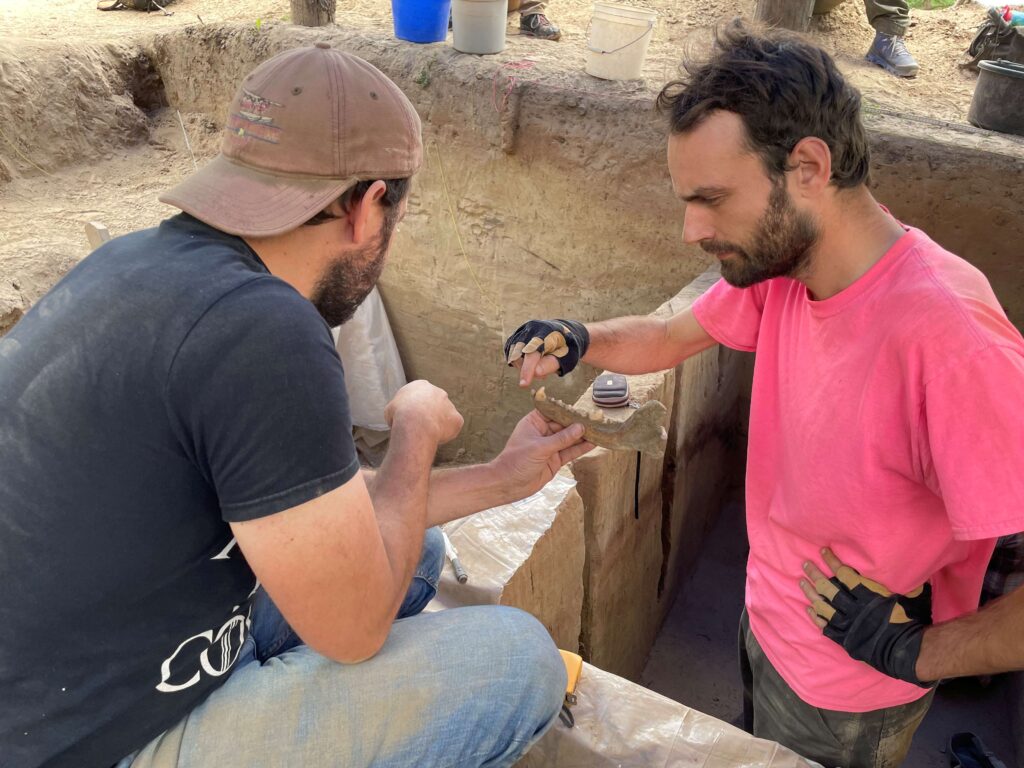
Genetic testing also confirms a long history. It ties the Zhokhov dogs to those in Greenland, Siberia, Alaska, and elsewhere, suggesting Siberians were among the first to breed dogs. Early breeds, whose ancestry may go back to Eurasian wolves 20,000 or more years ago, were likely huskies, malamutes, and others bred to pull.
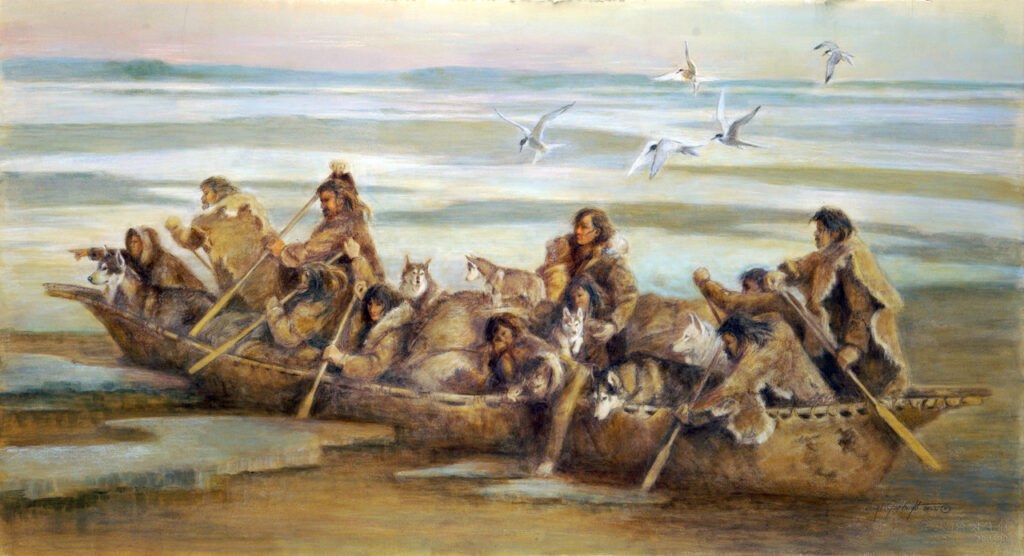
For a visual of this murky history, check out Veryl Goodnight’s Out of Asia painting, featured in Hegener’s book. It portrays Siberian families arriving in a walrus-skin boat with husky-type dogs. Goodnight worked on the piece for six months, steadily coached by 1980 Iditarod winner and mushing scholar Joe May.
“The research keeps opening new doors,” says Goodnight, echoing Hegener, Lanoë, and others who believe scientists will continue finding earlier evidence of the dog-human bond.
Before sleds, dogs may have first packed food and materials in early panniers. They also aided hunting by surrounding polar bears or sniffing out seal breathing holes. But sleds changed everything, allowing arctic people to travel faster and farther than ever before. They expanded trade, reached new foods, and moved freight like tents or caribou meat.
Sleds were eventually innovated from antler, bone, or driftwood. Some early runners were merely frozen fish wrapped in animal skin and polished with moss or mud. For fuel, the dogs ate what the people did, including marine mammals and salmon. And as sleds evolved, so did dogs, diverging into unique breeds.
Whites arriving in Alaska described sled dogs as ‘wolfish’ and ‘wild.’ But fur traders, settlers, and missionaries adopted mushing and bred their own “outside dogs” into the mix. Arctic explorers – and their rescuers – took up mushing, too. In 1898, Klondike miners hooked into malamutes and other freighters to climb up out of Skagway. Their adventures went viral through Jack London and news reporters.
In 1908, Nome’s All-Alaska Sweepstakes became Alaska’s first mushing race, meant to promote dog care. Leonhard Seppala, a Norwegian-born breeder of Siberian huskies, won the race three times. and in 1925 he mushed the riskiest leg of the diphtheria serum run to Nome, immortalizing Togo, Balto, and other working dogs.
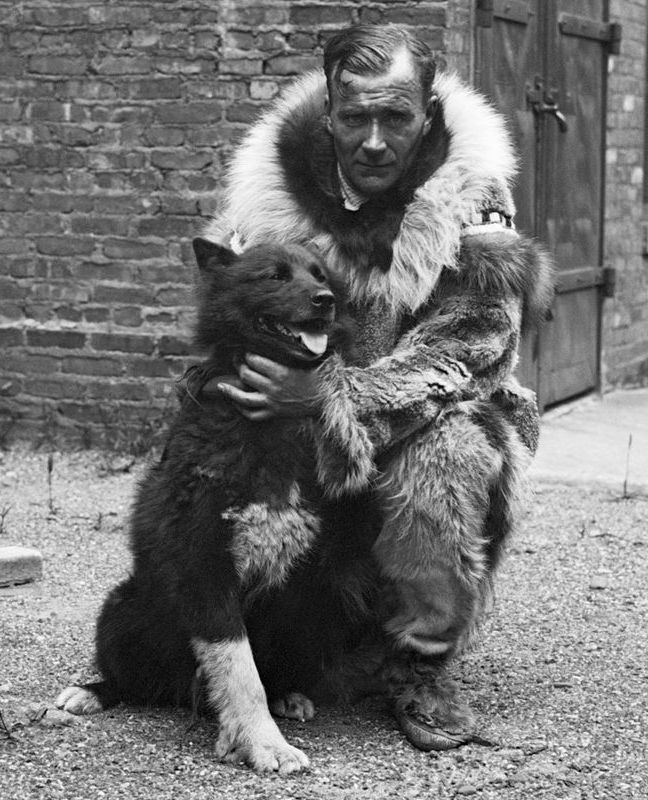
Two years later Seppala and his huskies crossed the lower 48 by train and joined the New England racing scene. In 1932, they raced as a demonstration sport at the Lake Placid Winter Olympics. It’s all part of what Hegener calls mushing’s heyday. Forty years later, it’s what Redington and others sought to preserve through the first Iditarod, helped by volunteers like a young Hegener.
Yet Hegener and others say that mushing is harder today. “Races don’t pay very well, and dog teams are hard work,” she says. But she adds that people still take up mushing, whether for recreation, freighting, racing, or cultural connection.
Out on the land
Jody Potts-Joseph, who is Han Gwich’in from the upper Yukon River near the Canadian border, is among those keeping mushing alive.
“I was very much raised in the basket of a dogsled,” she says.
Her parents and grandparents hunted and trapped along the upper Yukon, tying her to family traditions stretching back more generations than anyone can count. She remembers teams of four or five “trapline dogs” – malamute-style dogs weighing over 100 pounds – who pulled heavy loads all day long at three miles an hour. Huskies bred for racing average half that size and can sprint over 20 mph.
“Every family had a team,” she recalls. And honoring dogs for their work was a cultural teaching, she adds.
Potts-Joseph moved out of rural Alaska to attend college, raise kids, and build a career centered on the well-being of Indigenous people. In 2021, she returned to Eagle Village on the upper Yukon and now has 30 huskies. Among them are leaders like Coky, who she calls a “best friend,” and Labowski, who’s getting on in years but is still the “boss of the dog yard.”
In 2025, they ran the Copper Basin 300, Kobuk 440, and placed second in the Yukon Quest 200, where Potts-Joseph also won the Vets Choice Award for best dog care. This month, she’ll run her first Iditarod.
“It’s interesting navigating my traditional lifestyle on the land but also training dogs to race,” she says.
For Potts-Joseph, mushing’s essence remains traveling, hunting, and simply being on the land. She and her husband have re-opened miles of overgrown trails that her grandfather once used. But huskies bred for racing aren’t ideal for the slower work of checking traps or hauling firewood. She hooks them to trees when she works, but they “pound at the harness,” eager to run. Still, it’s good to be back running dogs on her homeland, where she can feel her ancestors’ presence.
“I think the land is happy to see our people back out there in a traditional manner,” she says.
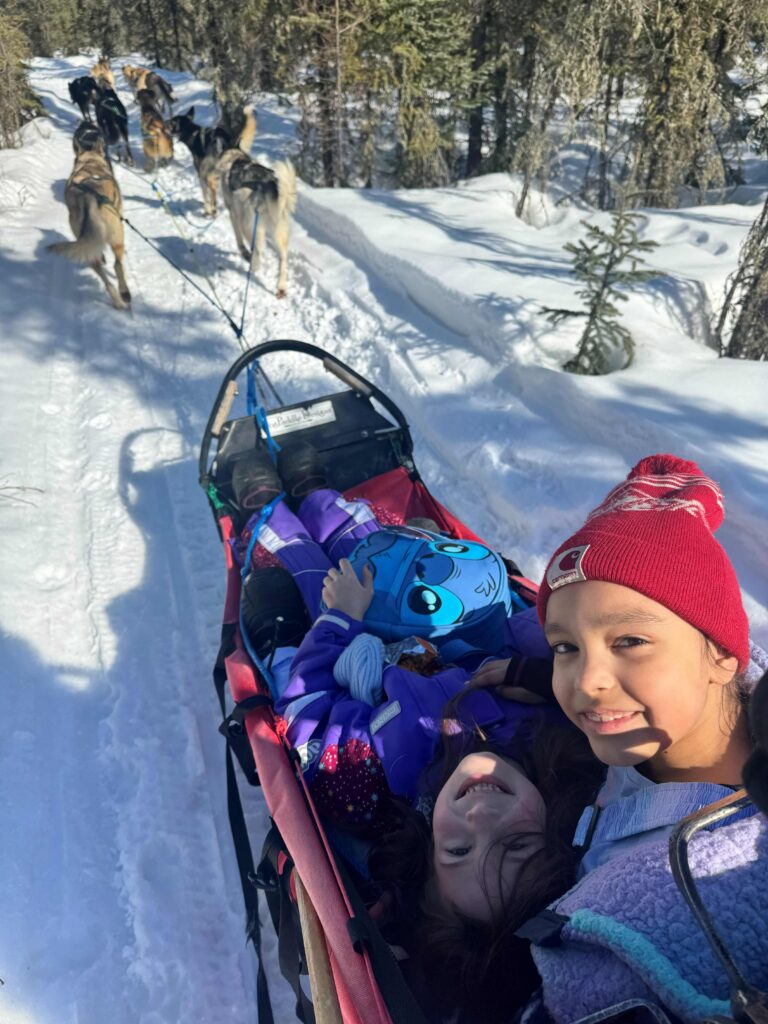
Yet dog teams are expensive, year-round work, she says. While she offsets costs with tours and even multiday expeditions, she knows it’s more than many families can afford. And climate change adds stressors.
“It used to be cold here,” she explains, with winter temps hovering around 20 below and periodically plunging past 60 below. Summers were hot but cooled off in August. Rivers would freeze in late October.
All that’s changed, she says. Last September it was still 80 degrees, far too hot to train dogs. Sometimes rivers don’t freeze until December now, limiting travel. And last January, she hit rain on the Copper Basin 300, something unheard of in her youth.
“It’s hard on the dogs,” she says. With their thick coats, they run most comfortably between 10 above and 10 below. She doesn’t run them at over 40 degrees.
But the hardest change is the crash of king and dog salmon on the Yukon, which scientists at least partly blame on climate. It threatens people’s food security and robs mushers of traditional food for their dogs. Lanoë’s salmon-laden canid bones dating back 12,000 years at Swan Point attest to the depth of a tradition that now feels torn away.
“When I grew up, we never had to shop for food for the dogs,” says Potts-Joseph. Each fall, mushers caught enough fish for the year. Fish were split and dried, and many people cooked for their dogs. Potts-Joseph says the dog salmon they are now banned from harvesting provided the best nutrition for dogs.
She says today’s $78.00 bags of dog-grade meat make racing “wildly expensive.” The cost, including freighting food to villages, forces many mushers to keep fewer dogs. Others have given up altogether. Potts-Joseph keeps her own numbers low, even as a smaller pool is limiting for racing.
“Sometimes it feels like a dying sport,” she says, pointing to falling Iditarod entries.
But she’s keeping on. More than that, she wants to attract youth to mushing to promote wellness and cultural connection. She has led snowboard clinics for Native youth and hopes to do the same with mushing.
“There’s a lot of cultural teachings to pass along through mushing,” she says.
Making it pay
Lauro Eklund knows that making it as a young musher isn’t easy. The 29-year-old bought his first dog, Annie, 10 years ago for $600.00 and two cords of firewood. Today, he has over 40 huskies at his Two Rivers kennel east of Fairbanks and is a full-time musher working an ambitious race schedule. But it hasn’t been a straight path.
“The early years were tough,” he says. He stayed afloat working construction and a string of side hustles that included guiding river trips, selling firewood, reality TV, and even modeling for Filson clothing ads. Each summer, he and his dogs still relocate down to Juneau to give tours to cruise ship passengers.
“I was putting every penny into it,” he says of the early years, sometimes with barely enough gas in his truck between paychecks.
Eklund grew up in Fairbanks and Anchorage but spent time in bush Alaska with his dad, Neil, and his dogs. They ran traplines, sold firewood, and in fall put up dog salmon from the Yukon, which was “like money in the bank” for mushers. His dad ran the Iditarod twice in the 1980s. Mushers and their stories swirled around his youth.
When Eklund took up racing, Neil warned him “not to play around with it.” You have to commit, he told him. It means getting up at four a.m. when it’s 40 below to ensure the dogs have enough straw, and at the end of the day caring for them before you even feed yourself.
“The dogs come first,” his dad said.
Eklund might have quit if it wasn’t for mentoring from his dad and other “solid mushers” like Sebastian Schneulle, Lance Mackey, and Jessie Holmes. They taught him about dogs, business, and the all-or-nothing attitude needed to make it.
He also learned about breeding. Eklund breeds for slightly bigger, broad-chested dogs with thick coats, but who can still pull fast enough to someday win the Iditarod. Like other mushers, his team’s bloodline reaches diverse kennels, including champion dogs from Carl Erhart and Pete Kaiser. This winter, he’ll run five mid-distance races and his third Iditarod, with top dogs such as Concho and Alder.
“I don’t know if I can maintain that pace forever,” he says, “but it’s good for getting the dogs into that athletic mindset.”
When racing is over, he’ll pack up his kennels and drive south for another four months of giving tours on the Juneau Icefield, where his entire team gets helicoptered up to the snowy world above the capital city. As camp manager, he does fewer tours than before. But he still spends plenty of time on the looped track where tourists steadily arrive by helicopter.
“Tourism has been good for mushing,” he says.
Research shows seven percent of Alaska’s nearly three million visitors give dog sledding a go. Eklund says it provides steady work in an era when trapping or selling firewood are no longer enough, and when the Yukon’s salmon have disappeared. There’s only so many pro sponsorships, he adds.
“Sometimes you feel like a robot going around the loop and saying the same thing to tourists,” he laughs. But he’s grateful for the earnings, the summer training grounds, and the chance to learn with other mushers.
When he’s back home and has some time, Eklund loves “being in the boonies” with his dogs.
“Mushing has brought a lot of adventure to my life,” he says.
Denali
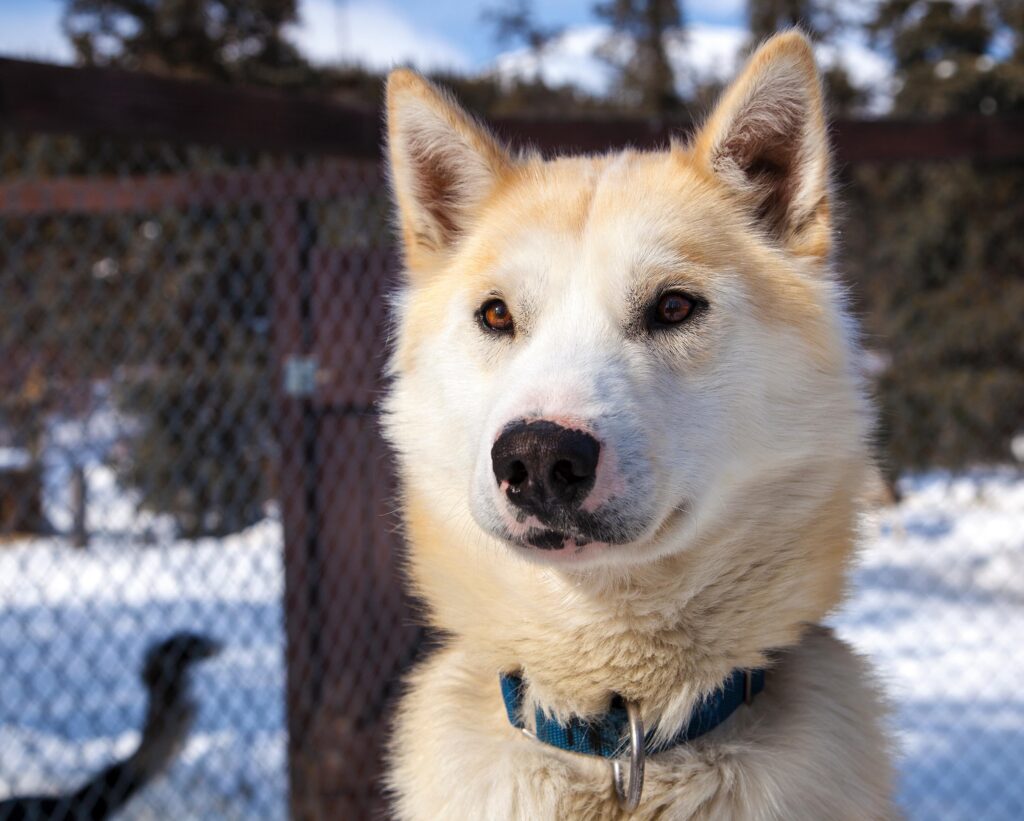
Mushing also carries on at Denali National Park, where for over a century rangers and scientists have used sled dogs to reach remote sites. The 32 dogs at the park’s kennel are also popular among tourists. In summer, 80,000 people visit for ranger talks or to see demonstration runs. Another million online visitors watch the latest litter romp around on the park’s puppy cam. Kennels manager David Tomeo says it’s all part of the park’s commitment to teaching about mushing history, including its Indigenous roots.
“Every time I fit a dog into a harness and hook a team to a sled, it’s no different than what someone did here thousands of years ago,” he says.
Tomeo knows the park plays other roles in keeping mushing alive, too. He’s watched kennel interns and employees go on to become vets, mushers, and even to run the Iditarod, and he’s always introducing the teams to school groups and youth camps. The park helps keep the sled dog population healthy and diverse, too, by breeding with other kennels in a “breed and split” approach where each kennel keeps half of new litters.
Tomeo also presents at events like the 2025 Willow Dog Mushing Symposium and other confabs and meetings. The gatherings loop together mushers, their fans, and kennels across the state, showing Alaskan dog sledding isn’t going anywhere, despite changing times.
“It’s an honor to do our part to carry on the tradition,” says Tomeo.
Tim Lydon is the associate editor of Alaska magazine.

Comments are closed.