
The Siege at Kroschel Wildlife Center
By Michelle Theall
In June 2025, eight days before Steve Kroschel fled to Russia with the clothes on his back and a
toothbrush, a group of Alaska State Troopers shouldered their AR-15s and raided his wildlife park.
Riding ATVs that shattered the quiet of a Southeast Alaska morning and wearing Kevlar vests, they
moved from building to building, shoving open Kroschel’s rough-hewn wood doors.
“Steve, you in here? Where you at? Police.”
Another officer deployed a drone for a birds-eye view of the rugged and remote 60-acre compound in
Mosquito Lake, 45 minutes from the nearest town of Haines, counting vehicles on the lot, watching for
movement, and searching to see if anyone might be hiding in the alder thickets. For the men on the
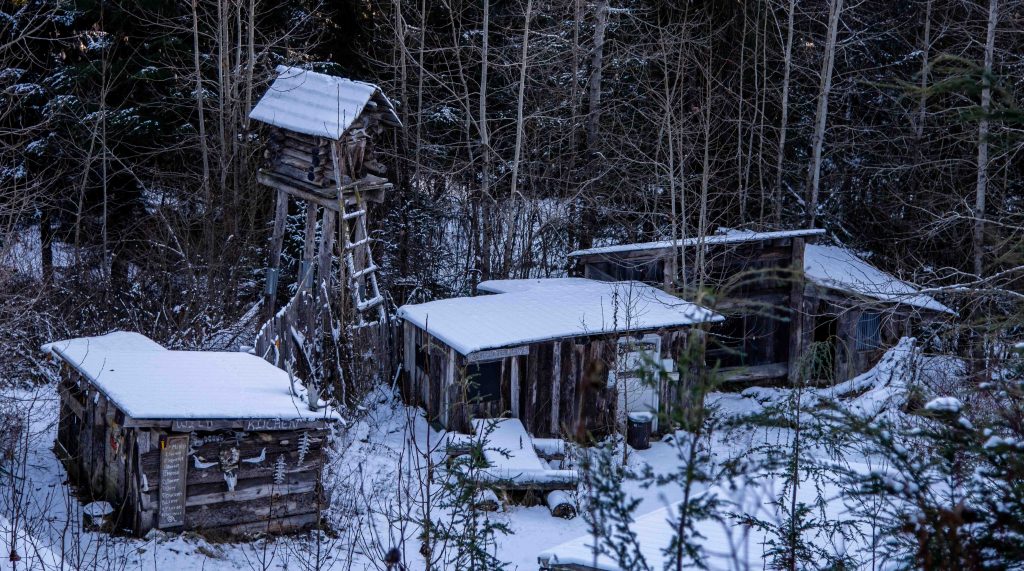
ground, the property presented multiple hazards: rusted rebar, loose boards and strewn wire, sagging
floors and decks, exposed nails, abandoned equipment, and plausible odds of opening a door and
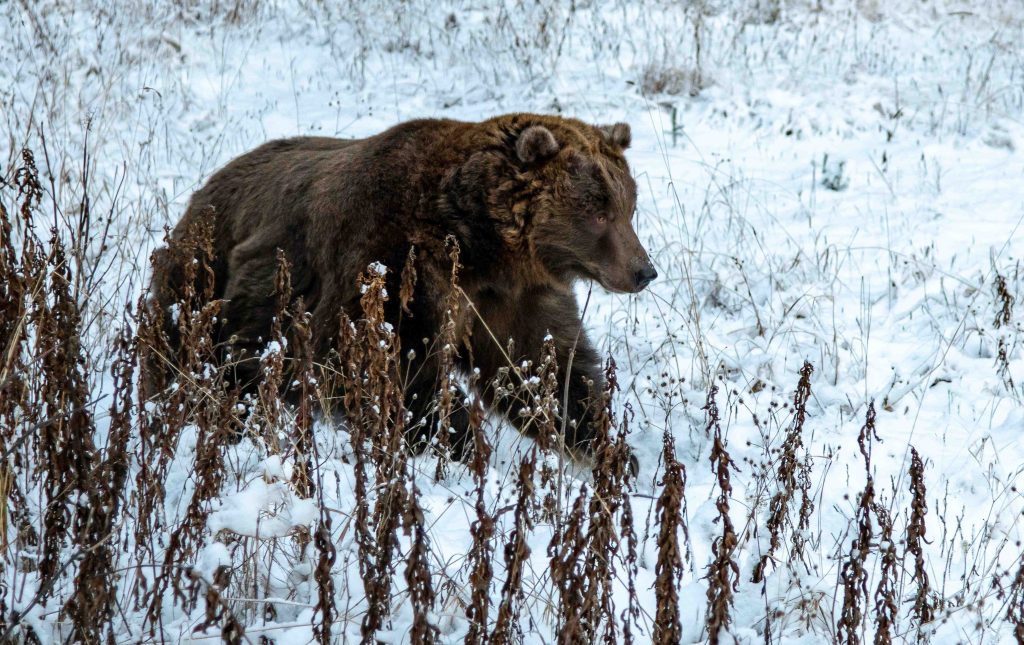
coming face to face with either Kroschel or a charging grizzly. At this makeshift wildlife park, the
boundary between tame and feral was as thin as fencing wire. Satisfied that Kroschel wasn’t there,
they radioed the all clear to the front entrance, where Ryan Scott, the director of the division of wildlife
conservation at the Alaska Department of Fish & Game, stood waiting. Scott gathered his team,
marched past the gate with its hand-painted sign, “Extreme Danger. Absolutely Not Safe-Do Not
Enter!!!,” and started capturing animals.
Kroschel, 64, who had founded Kroschel Wildlife Center 23 years earlier, was returning from nearby
Skagway after checking on reindeer he’d moved to a facility there. He didn’t own a car, so a friend
picked him up from the ferry. After 40 miles, they turned down the road that led to his property.
Kroschel grew nauseous: an empty helicopter sat in the middle of a field, as foreboding as a vulture
landing to feed.
“Go by, slower. Okay, faster. No don’t stop. Oh my gosh. They’re here. Look. Troopers.” His voice
shook as he gave his neighbor hushed instructions. “Go around. They’ve got that blockaded. Go past
them, okay.”
As they passed four troopers, one gave a tentative friendly wave. The others squinted to see who
might be inside the vehicle. Kroschel’s friend dropped him at a neighbor’s house, where Kroschel
called a lawyer to ask if he might be arrested if he went to his house. As he waited for answers, he
heard the unmistakable roar of Kitty, his grizzly, echo across the valley. He couldn’t hide out. He
needed to stop them. He walked up the road. One hundred yards from the troopers, he presented
himself with his arms outstretched, like a “gentle Jesus,” he recounted, terrified they might shoot him
for trying to save his family of wild creatures behind the gate. Kroschel had lived with them for more
than 20 years, with legal permits issued by the same officials now descending on his property in a
military-style siege with guns, a helicopter, horse trailers, and kennels to take his animals away. How
had things gone so horribly wrong?
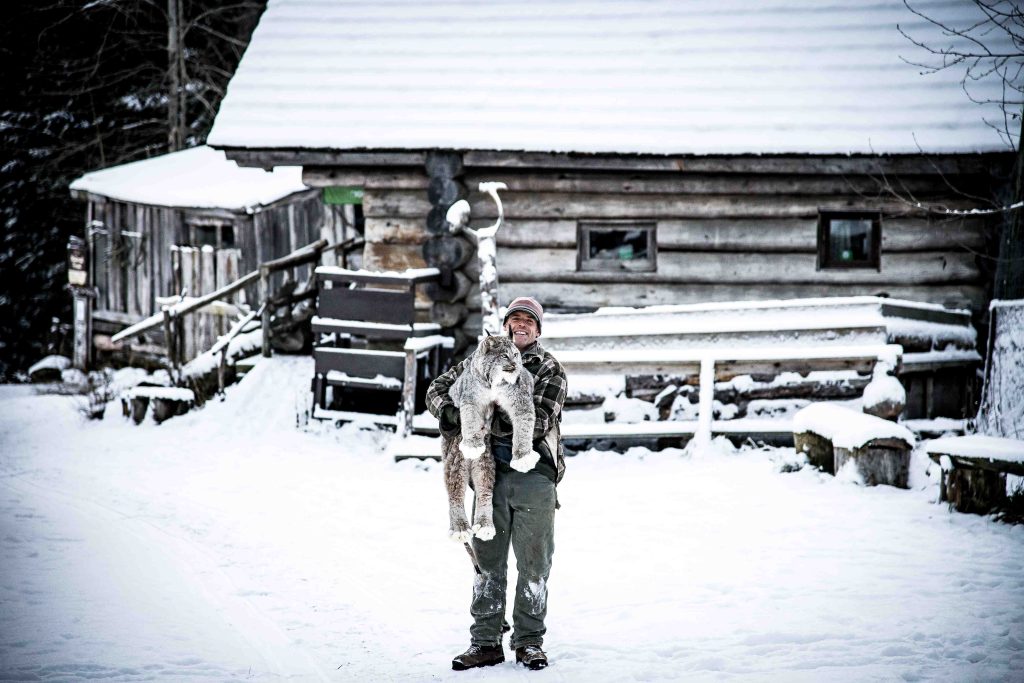
I’d heard rumors about Kroschel long before I first met him in 2017. He went barefoot year-round. He
believed animal dewormer could cure human cancers. He shared his bed with a lynx. Despite the folklore, or perhaps because of it, his tour was widely popular. Travel outlets including Condé Nast Traveler and Tripadvisor annually ranked the Kroschel Wildlife Center as a must-see excursion for the millions of cruise passengers sight-seeing along the Inside Passage.
When I visited the facility that year, it was a typical November day in Southeast Alaska: fog, mist,
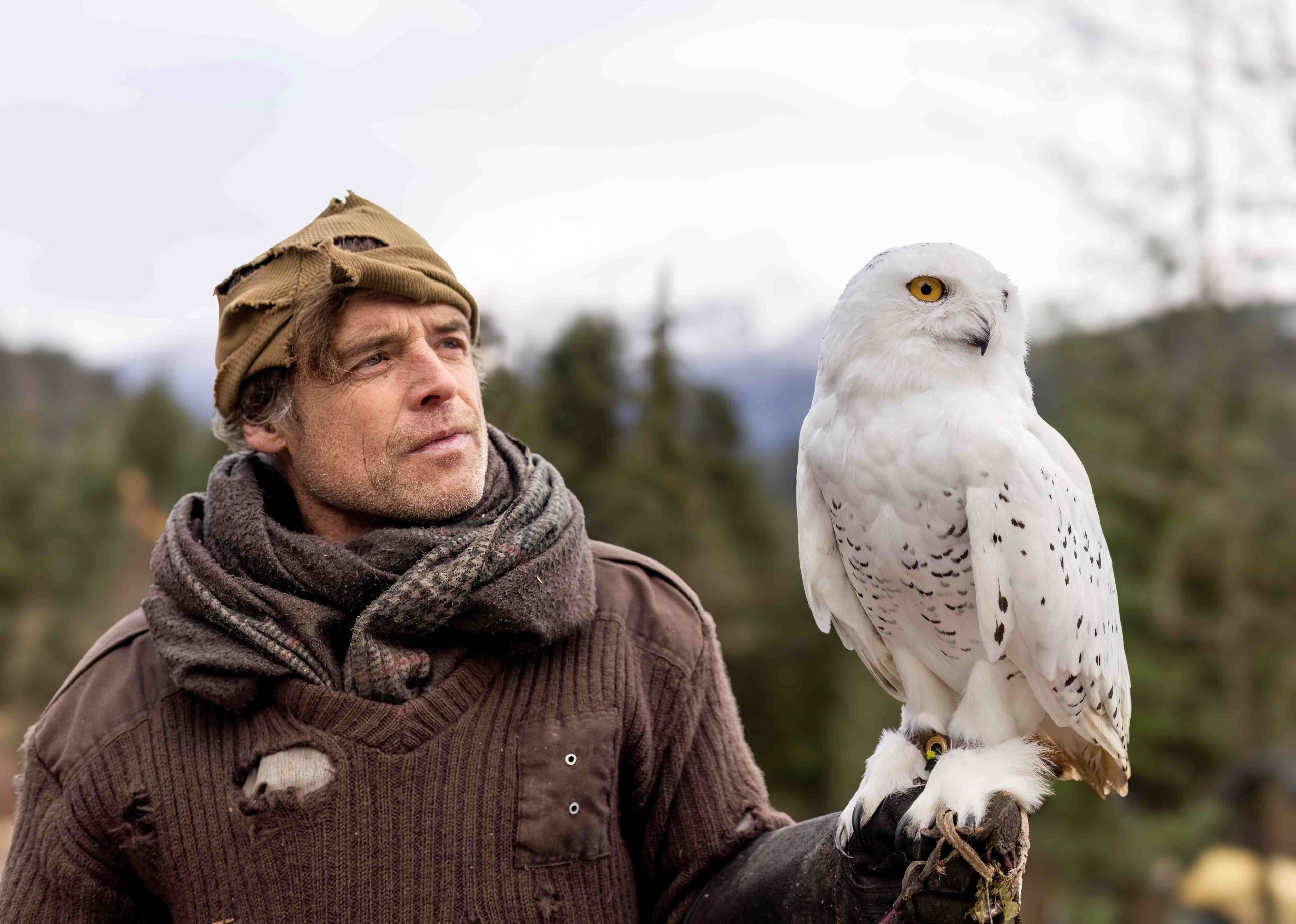
bone-chilling cold. Kroschel greeted our private group of five at a ramshackle gate with a snowy owl
perched on his arm. Dressed in leather boots and thick cargo pants, he projected a rugged,
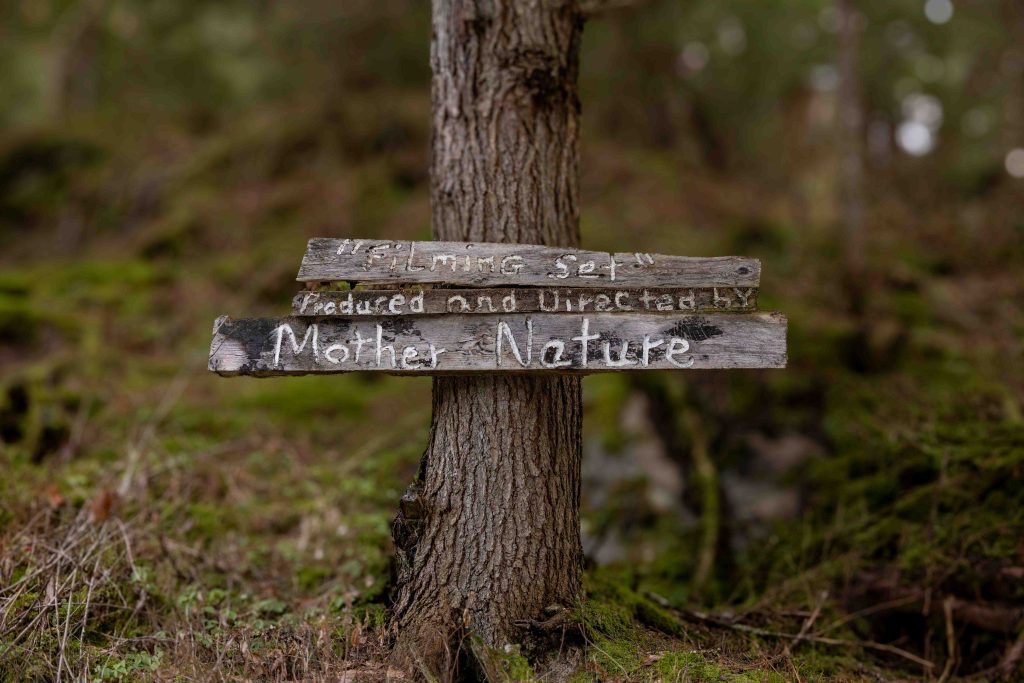
charismatic, Harrison Ford magnetism. He led us along an icy path to various homemade enclosures,
outbuildings, and “movie sets,” explaining his career as a filmmaker and animal handler with Disney
and Universal Studios. “I’ve been doing this since I was in diapers,” he said, turning to walk
backward. “I grew up on a mink farm in Minnesota. My mom used to say—” He stopped abruptly,
hands on hips, pitching his voice high. “‘Stephen, you can’t tame a mink. They’ll always bite.’ But I
did. Took ’em to show-and-tell.” For a man who had lived most of his adult life without modern
conveniences or human companionship, he seemed surprisingly at ease with people.
The tour continued: We pet a porcupine, howled with a wolf, watched a full-grown lynx pirouette to
catch a frozen mouse mid-air.
When asked where his animals came from, he answered, “Oh, well, they’re all orphaned or rescued
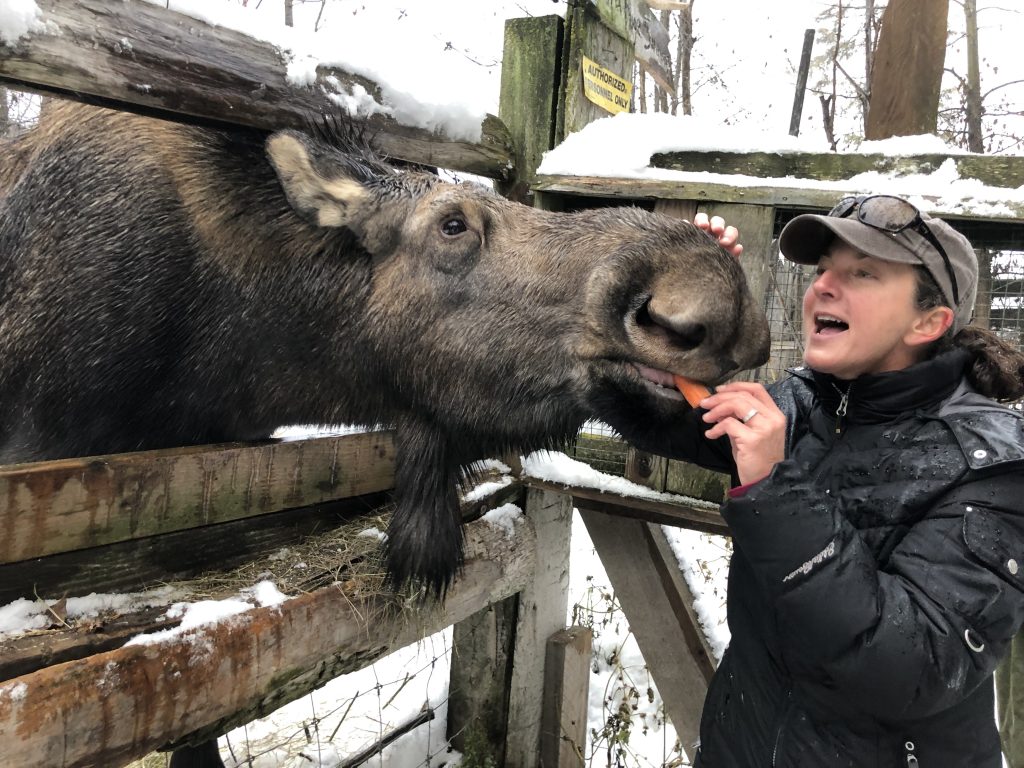
or propagated from such.” He pointed to Karen, a moose whose mom had been killed on the highway
in 2012.
Karen greeted us muzzle-first. I staggered at her size. She blinked her long lashes, her soft eyes,
expectant and friendly. We fed her carrots and kissed her nose, taking selfies.
“She gets to stay in Alaska,” Kroschel said. “Instead of going to some gawd-awful zoo in Chicago.”
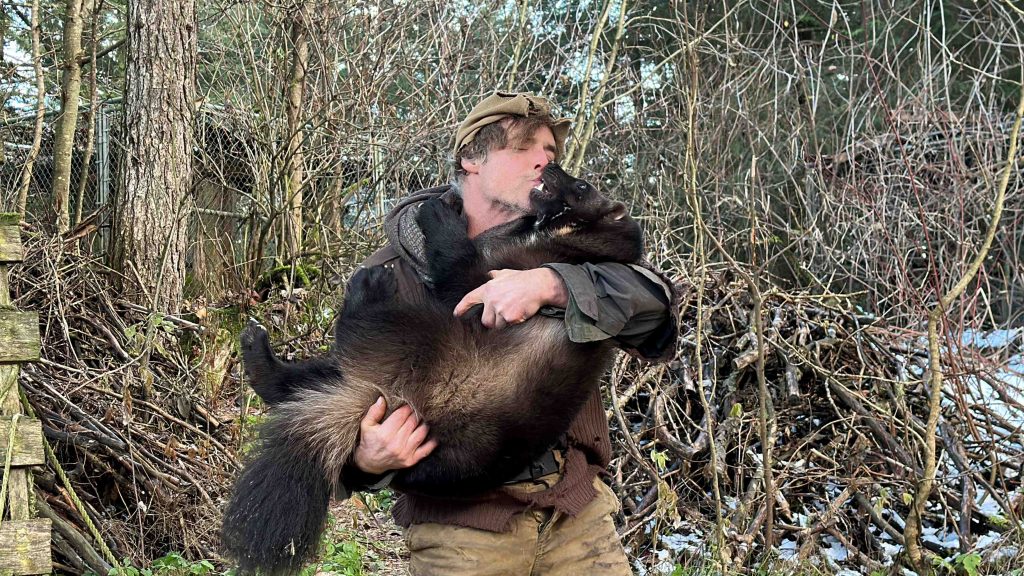
At one point in the tour, Kroschel emerged with a wolverine named Banff on a leash. Without a break
in his monologue, Kroschel dropped to the ground, prone like prey, and wrestled with it. While the
wolverine chewed at his clothes and licked Kroschel’s neck perilously close to his carotid artery,
Kroschel told us that he’s one of the few humans who has ever tamed a wolverine, an impressive feat
considering a wolverine’s jaws exert 1,700 pounds of pressure per square inch, enough to crush bone
and take down an adult moose. Kroschel’s sole purpose, he said, was to “provide moments with living
Alaskan wildlife that blow one’s hair back.”
Yet the question of animals in captivity remains a thorny one. Can anyone own a moose or a
wolverine? Should they? In parts of the Midwest and South, regulations are so lax that a man can
purchase a tiger cub as easily as a motorcycle. Kroschel’s ex-wife, in fact, owned and trained Bengal
tigers in Minnesota, until she was attacked and killed by one of them in 2006—a tragic day made
worse when Kroschel’s then-14-year-old son found her body. Kroschel, who had relocated to Alaska
five years earlier, told reporters that he hoped her death didn’t lead to a backlash against private
ownership of large animals. “She was an excellent teacher who helped people understand more
about wildlife than they would learn in zoos,” he said.
While Alaska may be the last truly wild place in America, it is more difficult for private individuals to
keep wild animals than in other states. Alaskans wishing to legally possess a game animal must
receive an education permit from the ADF&G, show that they have successfully raised livestock, such
as reindeer or musk oxen, for at least a year, obtain a USDA exhibitor’s license, and commit to
teaching the public about conservation. The state also requires owners to provide “food and water sufficient to maintain animal good health, an environment compatible with protecting the animal and keeping it in good health, and reasonable medical care.”
Such terms leave room for interpretation, admits ADF&G Permitting Biologist Stephanie Bogle. “No
two setups are the same, and we have to take each as they come,” she said in an interview in 2024.
For example, the ADF&G allows some facilities to breed certain species and to present animals to the
public for feeding or petting. When those animals die, the state often authorizes suitable
replacements. However, in 2023, the department began denying Kroschel these privileges, citing too
many non-compliance issues and emphasizing two specific incidents regarding inadequate fencing.
On May 5, 2021, bears were coming out of hibernation with empty bellies from an unprecedented
dismal salmon run. That morning, Kroschel, still in pajamas, heard noises outside his cabin. He put
on a pair of slippers and walked outside onto the front porch, down the steps, and around the corner.
As his vision adjusted to the dawn, a massive shape 15 feet away morphed from blur to bear in a
blink. Kroschel staggered three steps back as a grizzly, a behemoth of muscle and flying fur, bore
down on him and crashed against the moose fencing. Its teeth gnashed at the chain link with
Kroschel pressed behind it. As the thin metal between them collapsed, Kroschel did the only thing he
could: He ran.
He survived the bear attack, but two of his park’s most beloved animals did not. The ravenous bear
broke into Kroschel’s fenced moose pasture and killed Karen, the moose I’d met three-and-a-half
years earlier, and another moose named Laura, caching their bodies in the snow. In turn, authorities
ordered that the bear also be destroyed.
Two years later in 2023, Kroschel’s “replacement moose,” an orphaned bull named Duck Moses,
jumped through an open viewing window in the same pasture and escaped through a missing section
of fence. Ironically, the chain link had been cutaway by an electrician installing the electric fence that
the ADF&G had required in the wake of the bear attack. Tangled wires and hoof indentations in the
mud told the story: Duck Moses had wandered out the gap, then made several attempts to return to
his enclosure, and had been shocked with each try. Kroschel searched for hours through underbrush
and swamp until he reached the dirt road and stared across it into the wilderness. Nothing. For.
Miles.
Several hours later, Kroschel returned to his cabin and notified Bogle, who informed him that the
clock was ticking: Moose hunting season would begin in two days and Duck Moses, who was
accustomed to being fed by friendly humans, was legal game. If Kroschel couldn’t find the moose
before hunting season kicked off, he wouldn’t be allowed to search anymore. Seething, Kroschel
posted a video on his Facebook page of him calling for his moose with a megaphone and searching
frantically by ATV. “The ADF&G gives me mere hours to save Duck the moose before moose hunting
starts tomorrow. What creature abandons another once united?”
The next day, the local paper quoted the department telling hunters that Kroschel’s moose was
untainted by medications. Essentially, the ADF&G gave hunters the green light to kill and eat
Kroschel’s moose.
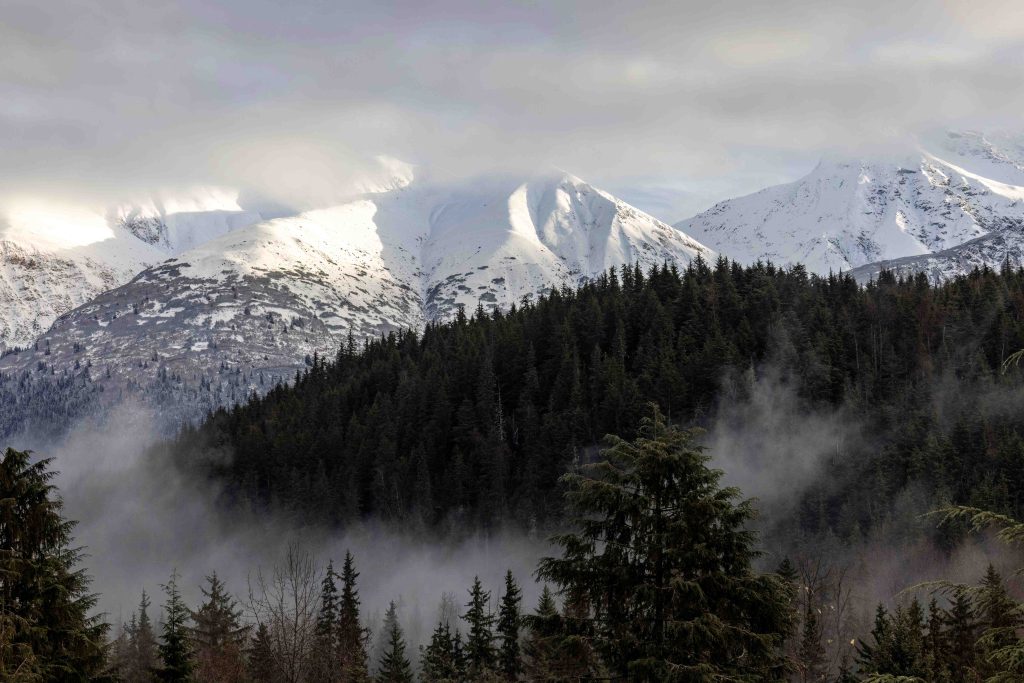
In the days that followed, Kroschel thought he saw Duck Moses cavorting with other bull moose
bachelors through the alders and along riverbeds. He also saw hoof marks around his property; maybe Duck’s, maybe not. He checked the Haines hunting registry to see if a young bull matching Duck’s description had been reported as harvested. Eventually, hunting season ended, and Duck did not return.
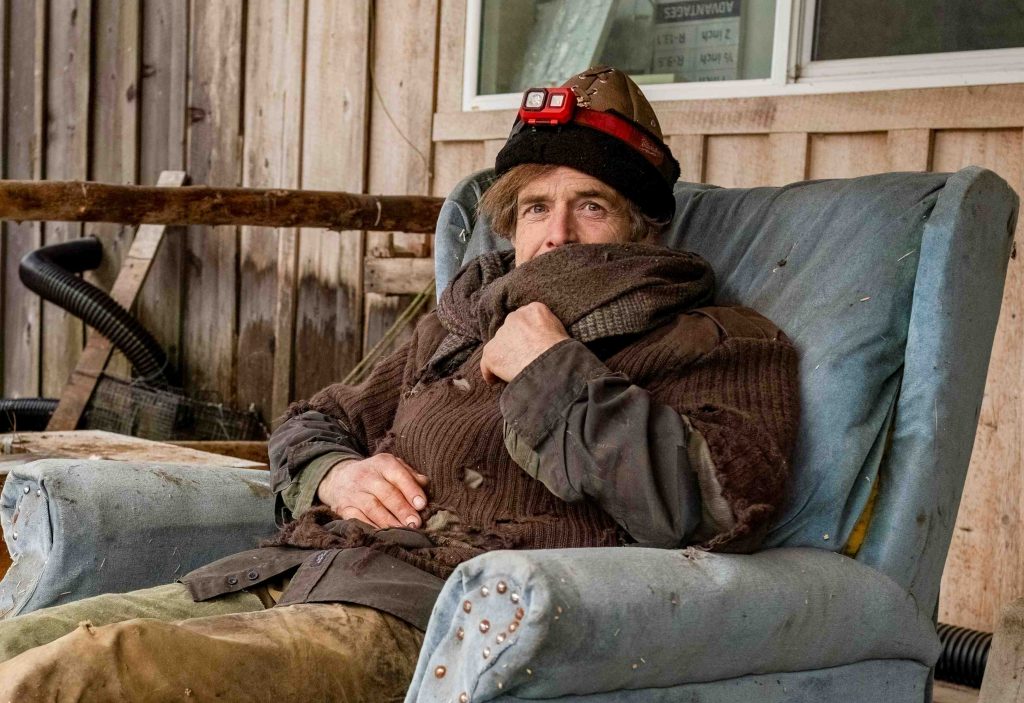
Soon, winter descended like a shroud, and the sun, dimmed by fog, snow, and clouds, ceased
cresting. Kroschel descended into darkness, too, spending hours in his cabin on the internet,
researching the war in Ukraine, the proliferation of nano-technology mind-control, and government
conspiracy theories threatening imminent nuclear war. When it already seemed like the world was
coming to an end, Kroschel woke up one morning and found his wolverine Banff, his favorite animal,
dead from natural causes at the age of 17.
With spring cruise season around the corner, and three of his beloved animals gone, he needed
replacements and went into panic mode. Instead of approaching Bogle, as he normally would, he
began firing off emails to Bogle’s boss, Ryan Scott, and to the ADF&G’s state-appointed
Commissioner Douglas Vincent-Lang. Then he began writing to almost everyone at the Juneau-
based ADF&G headquarters, sending hundreds of ranting and accusatory emails. “It’s impossible for
you and your staff to understand the nuances of this entire operation in a couple of hours of a visit in
dress shoes,” Kroschel wrote responding to ADF&G authorities when they reiterated the list of
requirements he’d need to meet to be approved to take in new animals. When Duck Moses returned
on his own after three months on the lam, Kroschel saw it as the ultimate proof of the excellent care
his facility provided.
However, Kroschel wasn’t alone in attracting the attention of ADF&G and USDA inspectors. Other
captive animal facilities in Alaska, including the state’s own centers, had been cited for compliance
issues: sub-standard fencing, escaped animals, poor water quality, unexplained animal deaths, and
lack of emergency veterinary care. At some facilities—but never at Kroschel’s— captive animals had
even bitten tourists and killed other captive animals. Kroschel believed he was being personally
targeted by the ADF&G. A claim the department vehemently denied.
“Our first and foremost attention is to the animals, and then the public,” Ryan Scott told me. “We’re
not out to get anyone.” And while those other facilities made the changes the department requested,
Kroschel had not. The problems that state and USDA inspectors identified at Kroschel’s were ones,
Scott added, that “we’ve been asking him to fix for years.”
On December 27, 2024, Scott sent Kroschel a letter informing him that the ADF&G was revoking his
permit to keep and display wildlife. According to Bogle, no facility had ever had its permit taken away.
Kroschel’s had just become the first.
But he wouldn’t go down without a fight.
On January 17, 2025, Kroschel dressed in one of the few collared shirts he owned and appeared on
screen for a virtual hearing with a federal judge. He was representing himself: With a seventh-grade
education, hand-drawn exhibits scrawled on scraps of paper, and no witnesses, he faced off against
an army of USDA attorneys, state veterinarians, and animal care specialists.
The hearing lasted eight hours, and it became clear, as the day went on, that Judge Jill Clifton had,
like many of Kroschel’s cruise ship tourists, become somewhat enamored with him. At one point in
the hearing, Clifton interrupted the USDA’s witness to ask, “How do you build a perimeter fence on
your 60-acre property that will keep out grizzly bears?”
The witness replied that she “didn’t have a structural engineering background to tell you how to do it.”
“And I don’t have the imagination to think it could happen,” Judge Clifton replied.
Kroschel concluded his testimony with an emotional plea. “I’ve been working with wildlife since I was
a child. I’ve made hundreds of documentaries, natural history, about animals, many, many movies,
educational programs my whole life. This is all I know. My life is dedicated to this place. I’ve done it
with my own money. I’m not a nonprofit. These animals are my family. They’re all bonded to me.”
Kroschel smoothed back his matted hair. He stared into the camera.
“They’ve revoked my license, and they’re going now to seize the animals,” he continued. “If we’re
talking about the interests of animal welfare, this is a nightmare that’s about to occur with all of these
creatures that are going to be bewildered and lost without me. I won’t know what to do with the rest of
my life.”
Judge Clifton ruled in his favor, reinstating his license to keep and show his animals.
But this was a federal ruling, reissuing a license from the USDA, that had no authority over the state,
which still refused to allow Kroschel to reopen. For several more months, Kroschel fought to regain
his permit. He hired a lawyer, who filed an injunction to stop the removal of the animals. He wrote
letters to the state’s U.S. Senators, Lisa Murkowski and Dan Sullivan. He persuaded the local tourism
bureau, and this magazine, to send letters of support. Swayed by his plight, an insider at the ADF&G
risked her job to help him apply for a new permit. But all efforts failed. On June 26, six months after
he won his federal trial, state troopers descended with helicopters and AR-15s, to take away his
animals. Veterinarians darted the largest animals; wildlife biologists and technicians located and
captured the smaller ones.
While the animals were being removed, troopers photographed the enclosures, bedding, and
animals, looking for any signs of negligence or animal cruelty, the basis for their search warrant. They
noted barbed wire on the ground in the grizzly’s enclosure, infected wounds on her side, and a rotted
smell in her mouth indicative of a tooth decay. They found a fox in a kennel inside an inoperable bus.
Putrid bones, meat, and feces festered in the straw of other enclosures near elaborate tunnels where
the foxes hid. Several foxes had bald spots or patches on their coats that did not appear to be from
normal shedding. A few of the animals had dirty or insufficient water in their troughs or bowls.
Over two days, they captured 39 animals—bear, moose, wolf, lynx, fox, wolverine, ermine, mink,
marten, snowy owl, and red-tailed hawk, a veritable Alaska Noah’s ark—loading most of them onto
charter planes and boats to Juneau and then by cargo plane to Anchorage. The bear and moose took
a road trip to Anchorage via the Alcan Highway.
Eight months prior to the raid, I had asked Ryan Scott if there was a chance that some of the animals
would die or have to be euthanized if they had to be removed from Kroschel’s.
“Steve has blown that way out of proportion,” Scott said. “[Euthanization] is on the table. But it’s there
for a reason. That is not the plan. We can immobilize them. They’re safe; we’re safe. We’re pretty
good at it.”
“And you feel like [relocating them] would save their lives,” I asked.
“Yes, our goal is not to euthanize anything. That’s not what we want to do.”
“But the odds of it happening?”
“Low.”
“And if it did, was that animal better off having stayed there with [Steve]?”
“I don’t know. There’ll be people who certainly will argue that is true.”
Following the raid, the ADF&G issued a press release about the success of the siege. In it they
noted that a snowy owl and fox had to be euthanized. And a female wolf died after receiving an
unknown quantity of tranquilizing medicine from four attempts to dart her while at Kroschel’s. “Those
wolves were in perfect health,” says Patrick McMullen, a long-time volunteer at the park and retired
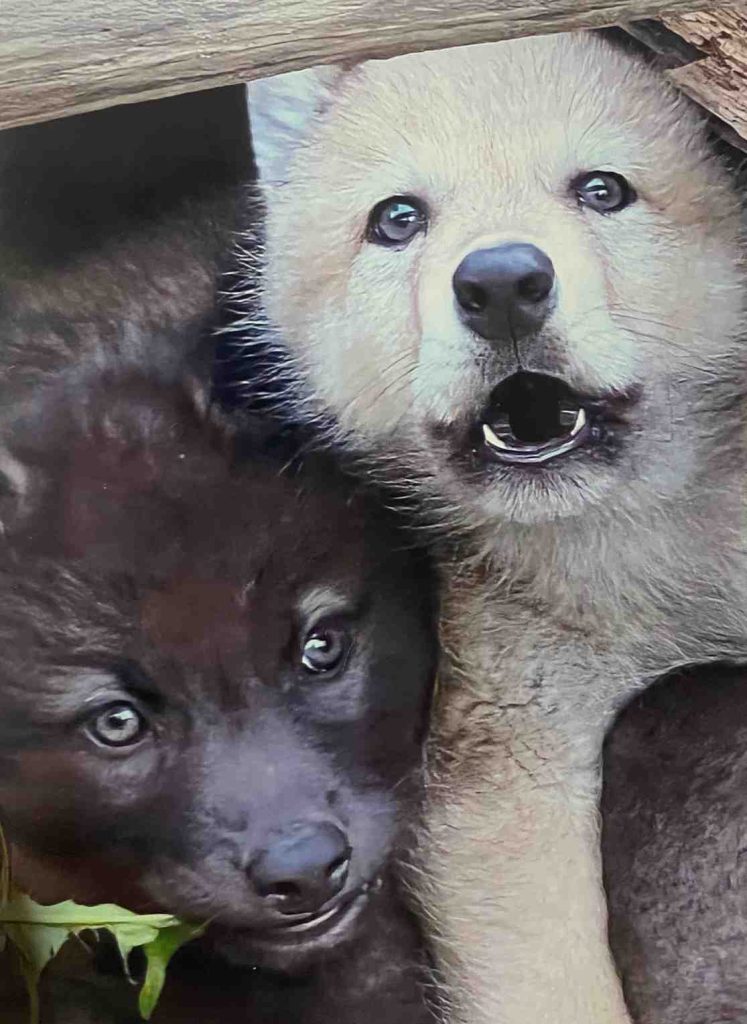
Alaska wildlife trooper. McMullen, who loved the wolves and had raised them from pups after
Kroschel had purchased them from a breeder in Minnesota, had last seen them at 5am, a few hours
before the raid happened.
“They’d start howling the minute they heard my truck on the dirt road,” he said, recalling his years with
them. “Best sound in the world.” McMullen would howl back at them. “I used to trap wolves. No more,
I tell you. They changed my life.” He visited Maluna, Ashina, and Meishka daily, usually in middle of
the night, to feed them and play with them. He’d leash them and run with them through the woods,
letting them feel as wild as possible at the end of a long rope. Their pull toward freedom had torn the
tendons in his elbows. The wolves were his family. The death of Maluna—broke him. No explanation
would bring her back.
“We brought an army of veterinarians. We work very hard to mitigate that,” said Scott, regarding the
animal deaths. “While I felt very badly about it, I can’t say it wasn’t unexpected. It’s not what you
want, but it happens.” He went on to explain that the department’s job is conservation, focusing on
the health and habitat of populations, not individual animals.
Two days after the raid, Kroschel was allowed to return to his property. The trooper vehicles blocking
his front entrance were gone. In their place, Kroschel found a memorial of flowers and supportive
messages left outside his gate, along with a copy of the warrant inside his mailbox. On his land, he
ran from building to building, hyperventilating and shaking. He sprinted into Kitty’s yard, yelling for
her, “Oh, God. No. No.” Out of breath, he entered the owl enclosure. “Ho, hoo! Ho hoo! They took this
one, too. It’s gone,” he said, filming the empty park. The animals, the only family he’d had for the last
two decades, were gone. Alone in his cabin, he felt like prey. He pictured men with guns breaking
down his door. His isolated sanctuary had been violated; his house was no longer a safe haven. Days
later, he completely unraveled. He borrowed money for a plane ticket to Russia where his friend ran a
wildlife park. He fled his home, his state, his country.
Beyond a few animals that escaped into the backcountry, the state left behind around 20 animals at
Kroschel’s—several foxes, a snowy owl, and a few smaller animals they were unable to capture, “due
to the unusual configuration of interconnected enclosures,” state officials explained in a press
release. They made no official arrangements for the animals to be cared for; Kroschel was no longer
around to help and was legally barred from doing so. So, McMullen assumed the responsibility, even
though the losses of the park brought him to his knees. He faced his sadness and the worst winter in
Southeast Alaska’s history to make sure the remaining animals weren’t left to die, and he alone
shouldered the cost of feeding them.
Months after the raid, the state officially charged Kroschel with three felony counts of animal cruelty,
each carrying a penalty of up to $50,000 and five years in prison. The three charges include the
alleged starving and subsequent death of a porcupine in 2024, a moose calf in 2023, and Kitty the
grizzly bear, found to have infected sores and possible dental issues. Kroschel, from Russia, argues
that the state has no ground to stand on—the 13-year-old porcupine had lived within its life
expectancy, according to a 2026 Association of Zoos & Aquariums report, and had plenty of access to
food, including uneaten biscuits found the morning of her death. The moose calf died just a few
months after being placed at the park in 2023, and multiple videos show Kroschel bottle-feeding and
blanketing the calf during its short time at the center. As for the bear, Kitty had lived with Kroschel for
more than 16 years, with various vet assessments during that time. She’d been eating, drinking, and
moving normally, with no indication that she was in discomfort. But the state’s charging documents
and evidence also contain hundreds of pages of disturbing allegations stretching back to the mid-
2000s: poor water quality, rundown facilities, dangerous food storage and dietary practices,
insufficient record-keeping, inadequate veterinary care, preventable animal deaths, unauthorized
possession of several animals, ineffective fencing, and Kroschel’s repeated refusal to address those
issues.
To convict Kroschel of animal cruelty, however, the state must prove that Kroshel knowingly inflicted
severe and prolonged pain and suffering on the animals. This could be a tall order, since just four
months prior to losing his USDA license, Kroschel’s vet had signed off on the health of his animals.
He loved his animals; this much is clear—and was convinced he knew best regarding their care.
Today, almost one year after the raid, most of Kroschel’s surviving animals have been relocated to the
Alaska Zoo, Alaska Wildlife Conservation Center, and Bird TLC—facilities with local veterinary care
and passionate, well-trained staffs. Kroschel, meanwhile, remains in Yekaterinburg, Russia, where he
has received temporary political asylum, citing fear of persecution upon his return to the U.S.
Meanwhile, the state of Alaska refuses to dismiss its case, and there’s an active warrant in place
should Kroschel set foot on U.S. soil. McMullen continues to care for the animals left behind by the
ADF&G at Kroschel’s facility. To date, no one from the ADF&G has come back to check on or retrieve
them.
As the dust settles, both Kroschel and the ADF&G claim to have acted in the interest of animal
welfare. Both believe that keeping captive animals as “ambassadors” can educate people about why
it’s important to save them. Yet it is only the once-wild animals who remain innocent—victims and
survivors in a war between humans playing God.
Michelle Theall, editor at Alaska, continues to follow this story. Get regular updates from her at
michelletheall.com/sign-up.

Comments are closed.