
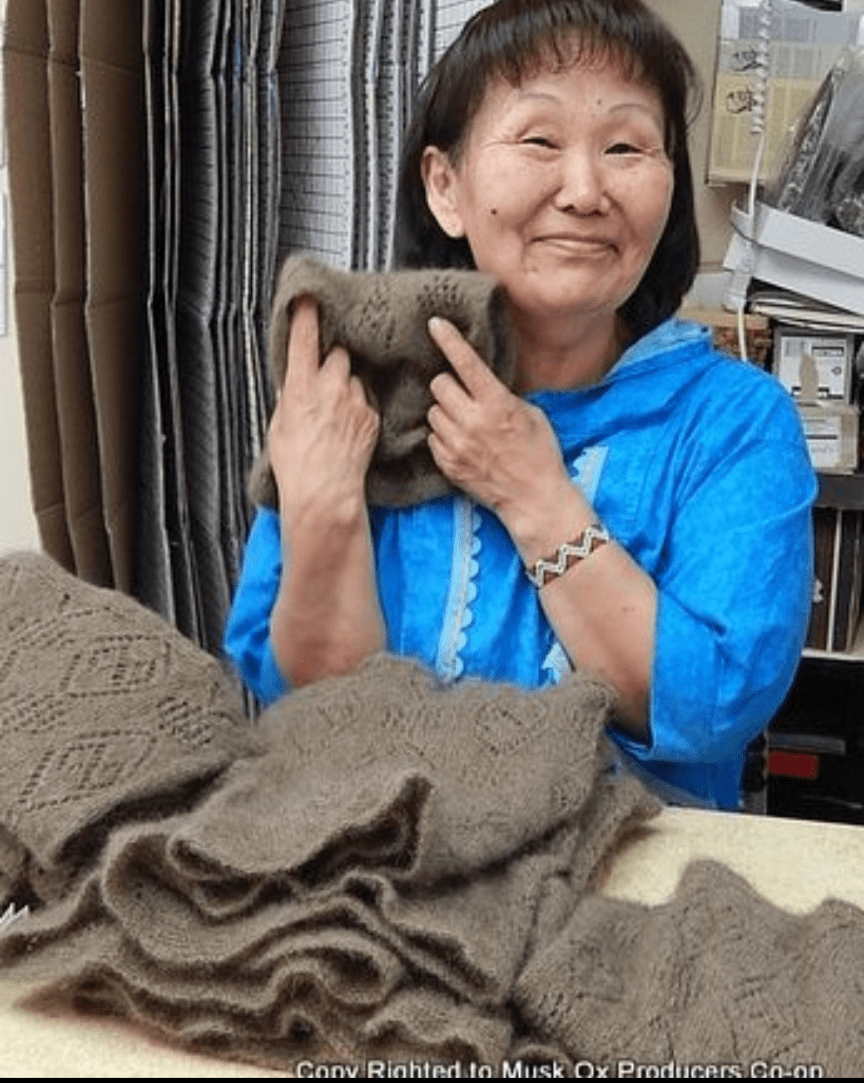
Since 1969, the Oomingmak cooperative has been keeping Alaskans warm with qiviut hats, scarves, and other accessories that are handknit in remote Arctic villages. Qiviut is the famously soft underwool that muskox shed in spring.
“It has a great insulating quality,” says Marie Texter, executive director of the cooperative. Speaking from co-op headquarters in Anchorage, she says qiviut is eight times warmer than sheep’s wool and doesn’t itch or shrink.
Texter says the co-op was established to provide economic opportunity in remote villages with few cash-paying jobs. But with no quotas or deadlines required of knitters, the arrangement also affords the flexibility villagers need to keep up with subsistence and other needs.
“So when the fish come in, people can still be at fish camp,” she says. “Or they can devote time to picking berries in summer.”
In between, Texter tells Alaska magazine, they can knit at their own pace for cash income. The flexibility also benefits community stability, she says, by giving people an income source that doesn’t require leaving remote villages. At the end of each year, Oomingmak distributes any cooperative profits to active knitters as a dividend.
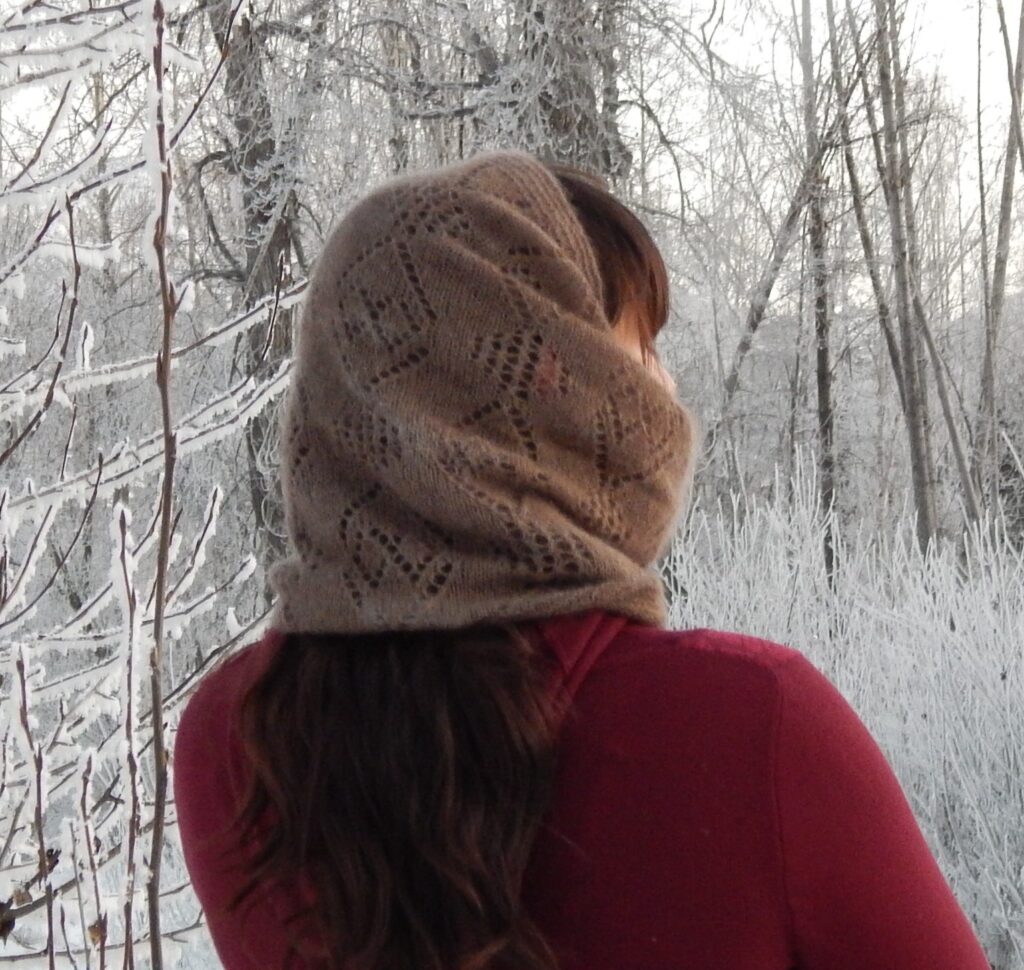
About 200 knitters belong to the co-op, but a smaller number are active each year. Along with hats and scarves, they produce headbands, baby caps, and nachaq – sometimes called a smoke ring – which is a hood that fits from the lower forehead to the back of the neck.
Knitters use both traditional and modern designs. Texter says traditional patterns often reflect the culture of individual villages, which she says helps “keep a record” of how things were done in earlier times. Currently, says Texter, a few of the communities that knitters represent are Stebbins, Unalakleet, and Dillingham.
To learn more, visit www.qiviut.com or call 907 272 9225.

Comments are closed.