

North America’s biggest cat is a rare sight here, but that might change
Austin Prine knows he saw a cougar run across the Elliott Highway about thirty miles north of Fairbanks last December. Prine, a long-haul trucker who was returning south from Prudhoe Bay, says the cat bounded across the snow-packed road and vanished over a guardrail. He estimates the animal was three years old and weighed about 110 pounds. But it was the three-foot tail that told him it was a cougar.
Also known as pumas or mountain lions, cougars are not known to inhabit Alaska. An avid hunter, Prine knows this. But having lived around cougars in eastern Washington, he also knows how to distinguish them from lynx, wolves, or other large mammals. And he believes that cougar reports are increasing in Alaska’s interior, including along the Elliott. When he posted his experience on social media, hundreds of people commented, with many sharing cougar reports.
“It was only a matter of time before I saw one,” he says.
Some in Alaska’s eastern interior say that cougars are expanding their range as mule deer move northward into the Yukon and Alaska. In many parts of their North American range, cougars depend almost exclusively on deer, which have breeding populations in the Yukon and may be moving into Alaska’s interior as winters warm up and snowpacks shrink.
Yet, as Prine says, cougars “are like ghosts” and are rarely seen. And while state biologists do hear reports, they lack verifiable evidence that they are in Alaska’s interior.
“We don’t refute the sightings,” says Clint Cooper, a state wildlife biologist who began working in the eastern interior more than a decade ago and currently manages the Creamer’s Field Migratory Waterfowl Refuge near Fairbanks. But Cooper and other biologists say confirming a sighting requires hard evidence such as hair samples, scat, or photos of tracks or animals. So far, no such evidence has come forward.
“Male (cougars) are known to range widely,” says Cooper, especially when they are around three years old and looking to establish their own territory. He says it’s possible that individuals periodically show up in interior Alaska, but he believes winters would need to warm up more for the cats to establish a permanent population. He explains that lynx, with big paws that keep them afloat on deep snow, are more adapted to the interior’s long winters but that cougars “don’t have the same build” and would more likely struggle.
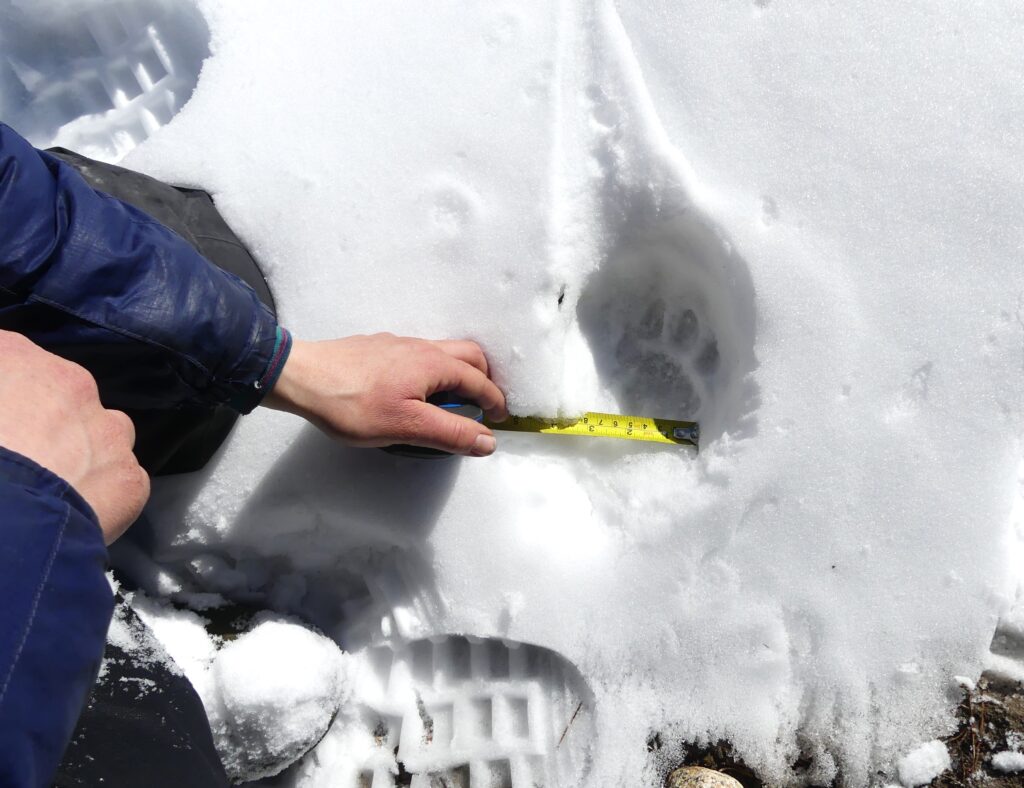
Cougars in the Yukon
Biologists agree that cougars in Alaska’s interior would arrive from the Yukon Territory. But Tom Jung, senior wildlife biologist for the Yukon government, says reports of cougars are sporadic.
“And there’s a long time between reports,” say Jung, who has been a Yukon government biologist 25 years.
Jung says that while the Yukon is remote, he would expect more reports if cougars were established this far north. For instance, he says, government biologists conducting aerial wildlife surveys have never spotted a cougar or recorded one of its tracks. They also don’t receive verifiable reports from drivers on the Alaska-Canada Highway. And especially in the last decade, Jung estimates that hundreds of people have installed private game cameras across the landscape, but only one captured a cougar.
That was back in 2015. Before that, the only verifiable cougar was one that turned up dead – and emaciated – in an abandoned car. Tracks indicated the young male was traveling with another cougar.
Like Cooper in Alaska, Jung says that reports of cougars usually lack verifiable evidence such as hair or photos. And it’s not uncommon for people to mistake lynx, wolves, or even dogs for cougars. The cougar’s long tail, he says, is a key identifier.
“But we take seriously any sightings,” says Jung, explaining that especially young males are known to disperse hundreds of kilometers from their home range.
So far, says Jung, evidence indicates that the northern-most breeding populations are around Prince George and Smithers, in central British Columbia – a long way from Alaska’s interior.
Are cougars heading north?
“Cougars are more than likely expanding northward,” says Julie Thomas, a wildlife biologist studying cougars in the Chilcotin Mountains of southcentral British Columbia. Her project is a joint effort between the University of Northern British Columbia and the B.C. government.
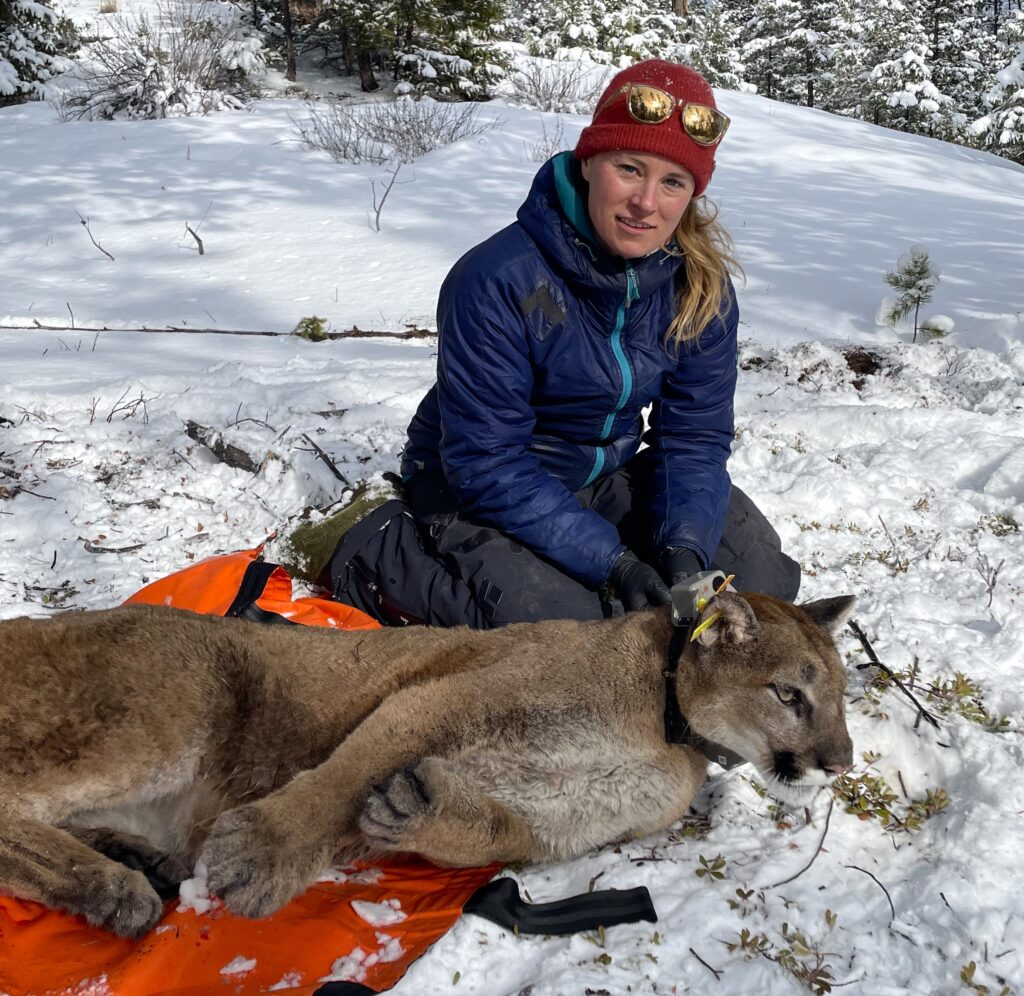
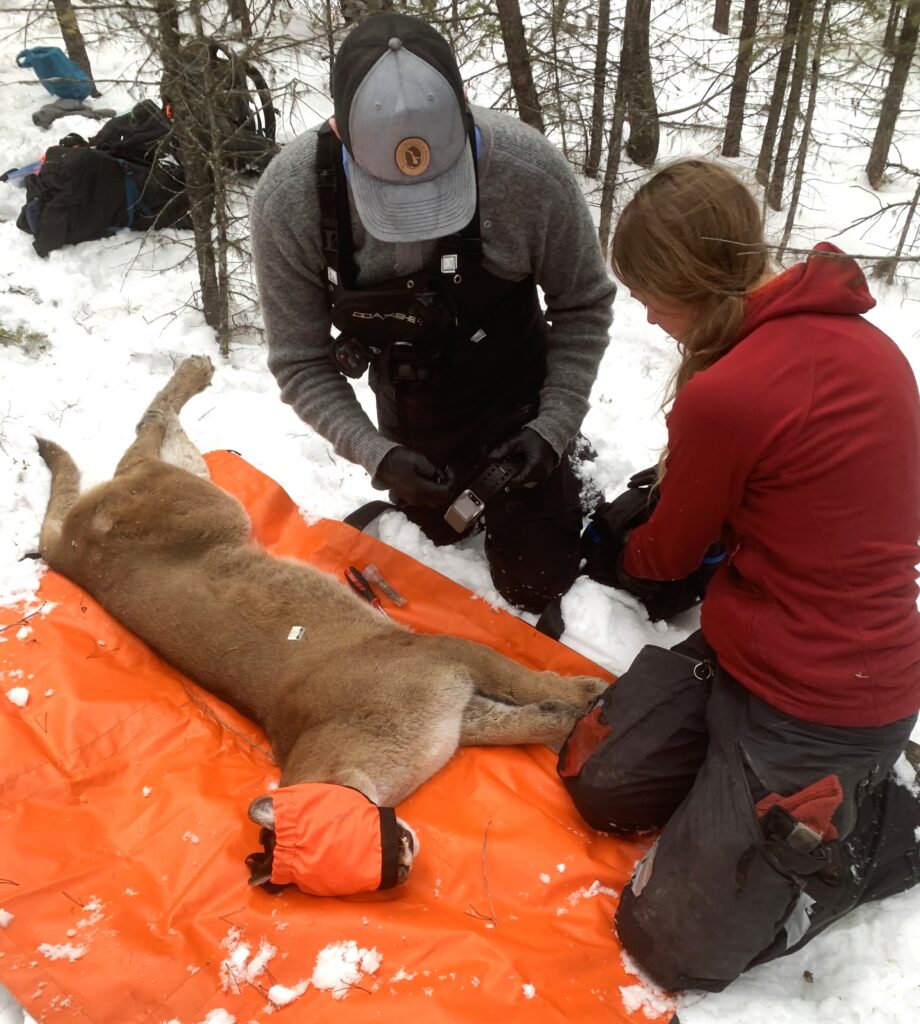
Thomas, who captures cougars and outfits them with GPS tracking collars, says that finding the elusive animal is difficult. During winters, she spends days or weeks hunting fresh tracks by snow machine. If she finds tracks, it might take additional days for her scent hounds to tree an animal. Once treed, a cougar is carefully darted and fit with a collar.
“It’s been a wild ride the last two years,” says Thomas.
She says her research, which focuses on cougar predation of caribou, reveals a predator that is “incredibly adaptive and versatile.” For instance, she’s found cougars in her study area prey on feral horses, moose, beavers, bighorn sheep, and caribou, with some animals having almost no deer in their diet.
“I went into this thinking they’d be primarily eating deer but that’s not what I’ve been finding,” she says.
The research could decouple the notion that cougars would need to follow expanding deer populations into interior Alaska. But Thomas is quick to say her work does not address Alaska. Yet, she says, warming winters and declining snowpack could aid northward expansion.
Cougars in the panhandle
While the changing climate may help cougars reach interior Alaska, something different is going on hundreds of miles away in southeast Alaska, where a man shot a cougar in June 2024. Last March, the man was fined for killing an animal that does not have a hunting season. But the incident adds to evidence that cougars periodically wander into the southeast rainforest from their breeding populations in adjacent British Columbia.
Boyd Porter, a retired state wildlife biologist who has been in Ketchikan for four decades, catalogued cougar reports as part of his job. He believes occasional animals, usually young males, disperse down the Unuk, Stikine, and other large rivers that flow to the coast from interior British Columbia.
But he says a lack of suitable prey and a dearth of other cougars likely prevents them from establishing a population. Porter also says the steep, glaciated peaks separating British Columbia and southeast Alaska likely limit access to the coast, since cougars are less prone than bears or wolverines to cross high mountains and icefields. The factors, says Porter, make the southeast panhandle a “dead-end” for cougars.
Yet evidence shows at least two cougars made it, including one accidentally trapped on Kupreanof Island near Wrangell in 1998 and another shot on Wrangell Island in 1989.
Just south of Alaska’s panhandle, Canadian officials confirm cougars are well established in British Columbia’s coastal rainforest. Populations are largest in the south around Vancouver Island and grow sparser to the north. The northern-most harvest report for a cougar is near Prince Rupert, less than fifty miles from the Alaska border. To Thomas in interior British Columbia, the lack of cougars in Alaska’s southeast panhandle represents a knowledge gap that might reflect both the secretiveness of cougars and a lack of research on their northern range.
“It’s a bit of a puzzle,” she says.
Tim Lydon is Alaska magazine’s associate editor.

Comments are closed.