Alaskans and their visitors can enjoy a new travel companion this summer. The Alaska Literary Field Guide, published in March by Mountaineers Books, brings a unique and artistic approach to describing over 90 species of wildlife, plants, and other features of Alaska. The book is written and compiled by Nancy Lord, Marybeth Holleman, and Shaelene Moler. “It’s not a traditional field guide,” says Lord. Instead, she describes it as a collaboration among writers, artists, and experts on Alaska’s natural world. The 330-page book features digestible descriptions of a sampling of the things we love about Alaska, including bears, glaciers, birds, plants, and the aurora borealis, to name just a few. Grouped by ecosystem, each description blends writing and illustrations. They bind together Indigenous cultural knowledge, Western science, and more. The diverse approach promises readers a new take on our favorite sights. “It was fun working with the writers, poets, and…


Congratulations to all!!! GRAND PRIZE WINNER Skating on Wild Ice Web — Utkan Kokaturk Last winter I explored Big Lake on Nordic skates. The snow-free surface revealed spiderweb-like giant cracks etched by vehicle/human traffic and shifting winter pressures under the ice. From above, it became a scene of both calm and motion; me gliding across a vast frozen canvas, tracing the interesting ice patterns shaped by winter. ADVENTURE WINNERS #1: The Great One — Dave Shreffler I took this image in Denali National Park in June 2025 from a vantage point near Stony Dome. Three cyclists were riding the car-less road as The Great One (Mount Denali 20,310 feet) loomed majestically on the horizon. The park road is closed at mile 43 due to the Pretty Rocks Landslide. Some intrepid cyclists hike their bikes around the landslide to experience the splendor of Denali National Park with no vehicles on the road.…

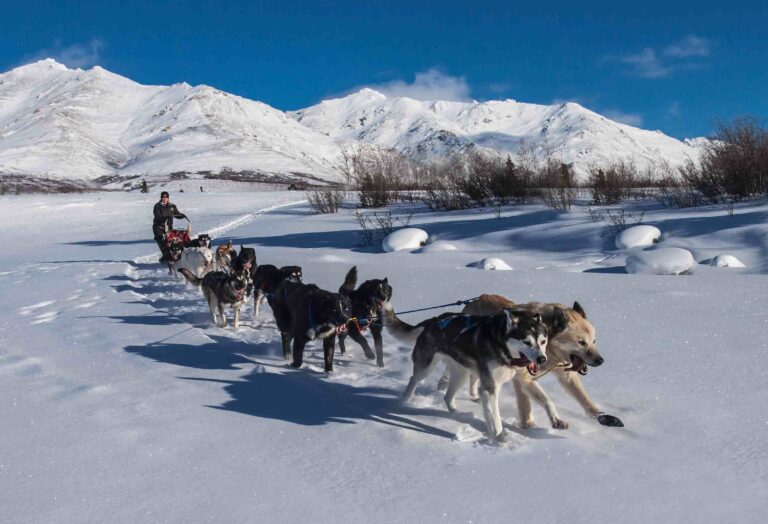
When the Iditarod teams bound out of Willow this month, their odyssey across the Alaskan wilderness will be more than a race. Rising and falling across a frozen landscape – stitching together far-flung rural communities as they go – they will help preserve an arctic sled dog culture that stretches back thousands of years.

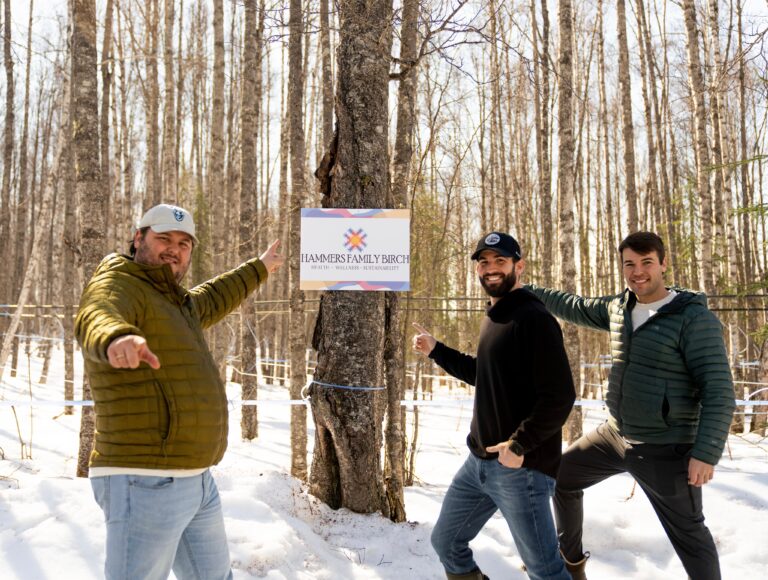
April 2024 April is birch syrup season in the boreal forest of Alaska’s interior. It’s a busy time for the Alaska-owned Kahiltna Birchworks, one of the world’s largest birch syrup makers. Company founders Michael and Dulce East started the business over 30 years ago from their remote homestead near Talkeetna, and in 2023 they sold it to Hammers Family Birch in Wasilla. “We have a great relationship with the Easts,” says Ted Hammers, the CEO and co-founder of Hammers Family Birch. “They helped with our 2024 harvest and trained us about the business.” While pure birch syrup is their signature product sold around the world, they also produce birch-based condiments and candies and supply to both local and national breweries, including Denali Brewing Company for its seasonal OneTree Birch Beer. Hammers also now owns Alaska Wild Harvest. Another creation of the Easts, the company buys wild Alaskan berries from independent…

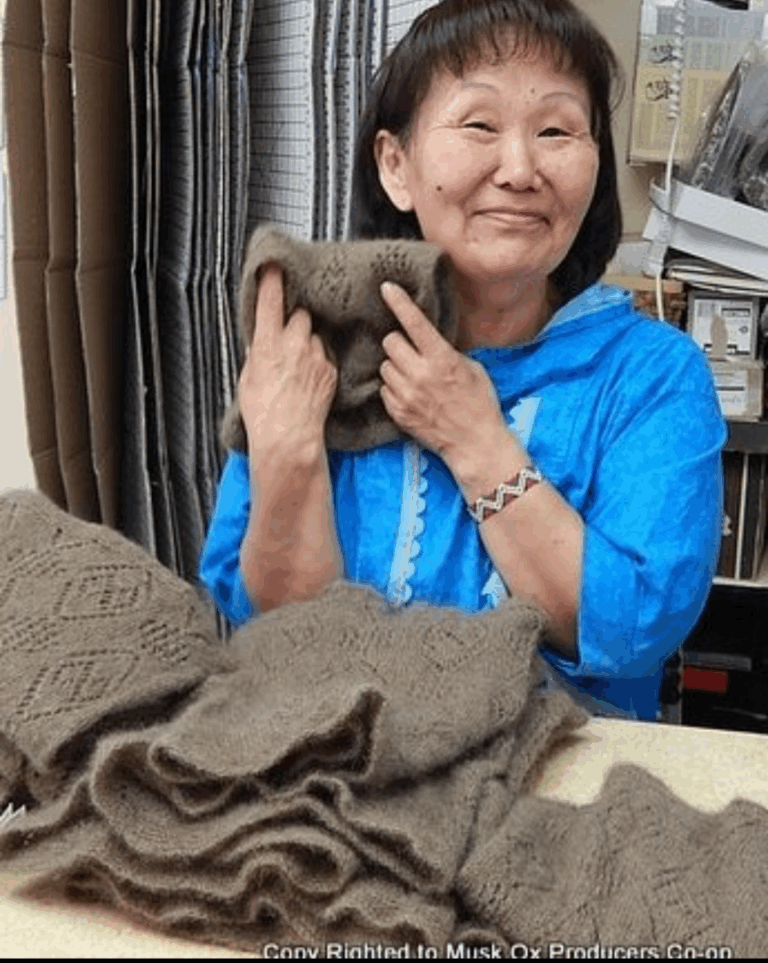
Since 1969, the Oomingmak cooperative has been keeping Alaskans warm with qiviut hats, scarves, and other accessories that are handknit in remote Arctic villages. Qiviut is the famously soft underwool that muskox shed in spring. “It has a great insulating quality,” says Marie Texter, executive director of the cooperative. Speaking from co-op headquarters in Anchorage, she says qiviut is eight times warmer than sheep’s wool and doesn’t itch or shrink. Texter says the co-op was established to provide economic opportunity in remote villages with few cash-paying jobs. But with no quotas or deadlines required of knitters, the arrangement also affords the flexibility villagers need to keep up with subsistence and other needs. “So when the fish come in, people can still be at fish camp,” she says. “Or they can devote time to picking berries in summer.” In between, Texter tells Alaska magazine, they can knit at their own…

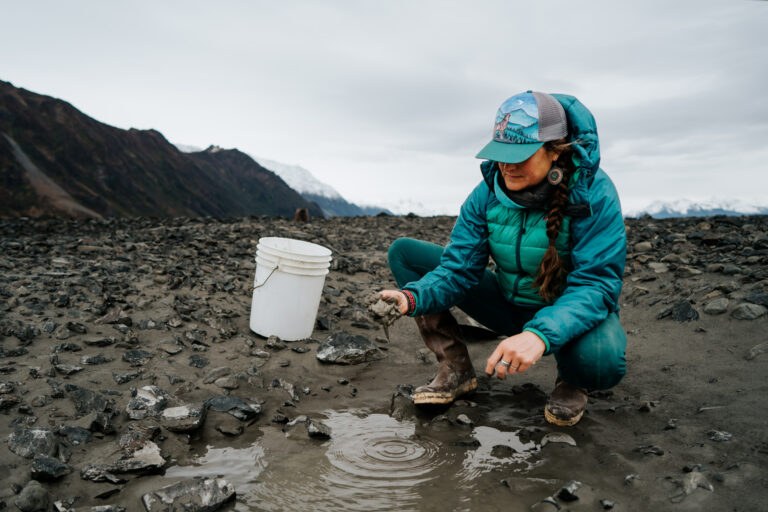
by Tim Lydon It’s been over twenty years, but Lauren Padawer still remembers the moment she fell in love with Copper River mud. While visiting Alaska for a rafting trip, her group stopped for lunch and a midday dip in the river’s cold-water eddies. She was mesmerized when her bare feet sank into the river’s soothing mud, which consists of fine silt that glaciers grind from the surrounding mountains. “I left that trip wanting to know where that mud came from,” Padawer tells Alaska magazine. Soon after, she moved to Alaska and within a few years launched her first soaps derived from Copper River silt. Today, Padawer’s Alaska Glacial Essentials Skincare, based in Cordova, offers an array of cleansers, moisturizers, creams, toners, and more. They’re sold by over 40 retailers in Alaska and online to customers across the U.S. and beyond. Her original signature product is a mud mask called the Glacial Facial, which uses silt to exfoliate and purify skin. Some products are also “supercharged” with wild Alaskan botanicals. But her main stay remains Copper River silt, which she harvests by hand under a permit from the Chugach National Forest. Clad in rain gear and XTRATUFs, she shovels the mud into five-gallon buckets from the river’s delta near…

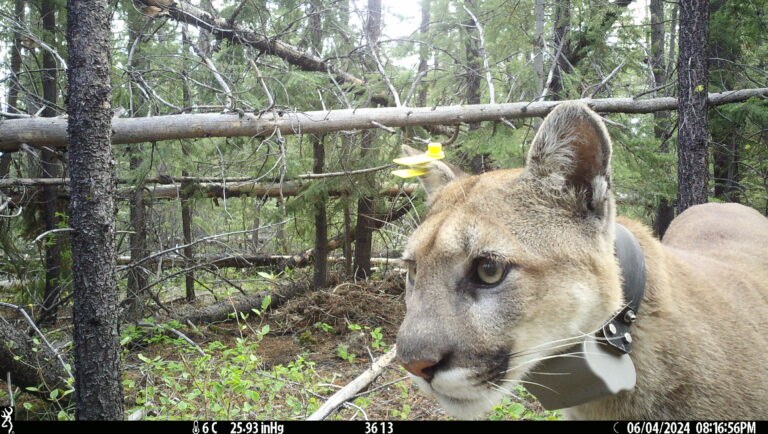
North America’s biggest cat is a rare sight here, but that might change  Austin Prine knows he saw a cougar run across the Elliott Highway about thirty miles north of Fairbanks last December. Prine, a long-haul trucker who was returning south from Prudhoe Bay, says the cat bounded across the snow-packed road and vanished over a guardrail. He estimates the animal was three years old and weighed about 110 pounds. But it was the three-foot tail that told him it was a cougar. Also known as pumas or mountain lions, cougars are not known to inhabit Alaska. An avid hunter, Prine knows this. But having lived around cougars in eastern Washington, he also knows how to distinguish them from lynx, wolves, or other large mammals. And he believes that cougar reports are increasing in Alaska’s interior, including along the Elliott. When he posted his experience on social media, hundreds of people commented, with…

Annie Alexander and Allen Hasselborg In 1907, Annie Montague Alexander, a naturalist, paleontologist and world traveler, was camped with a team of scientists on Admiralty Island in southeast Alaska. She was trying to make good on her dream of collecting specimens to create a museum of natural history on the west coast of America. Having witnessed the depletion and extinction of wildlife in the Lower 48, Alexander saw the museum as a way to help preserve the country’s natural history. C. Hart Merriam, the Director of the US Biological Survey, had directed her to attain as many bear specimens as possible. Alexander was trying her best to fulfil Merriam’s request, but that May in 1907, the expedition had collected very few vertebrate species and no bears. Their failure was even more disheartening since Alexander had spent the previous summer in Alaska and was also mostly unsuccessful — something she blamed…

Looking for a new April adventure? Consider heading up toward Tahneta Pass on the Glenn Highway to join this year’s annual Gunsight Mountain hawk watch. The main event is April 18-19 and features talks by pro birders, hawk counts, and a potluck barbecue. Last year, says Mr. Whitekeys of Anchorage Audubon, observers counted over 250 raptors in one day, although thousands of hawks transit the area each spring. “This is a spectacular event,” says Whitekeys. “It’s an almost eight-week parade of hawks.” Whitekeys first attended in the 1990s and was “immediately hooked.” Mat-Su Birders and Anchorage Audubon host the annual event celebrating the return of migratory hawks and eagles to interior Alaska, which peaks in mid-April. They include bald and golden eagles and over five species of hawks, including many Harlan’s red-tailed hawks. It’s been a popular spot to watch raptors since the 1970s and is now the northernmost International…

Keeping Alaska’s Busiest Port Open Visit Anchorage’s Port of Alaska in summer and you might notice a barge-like boat slowly plying the waters of upper Cook Inlet. Colored red and white, reminiscent of a candy cane, it has a boxy cabin on one end and a tugboat lashed alongside it. Beefy red arms angle out over the water from its open deck. This is the 180-foot Westport, moving at an almost imperceptible speed as it continuously sucks up the mud – or more accurately, the glacial silt – that every day threatens to seal off Alaska’s busiest port. In summer, the boat may operate around the clock. Although dwarfed by the port’s buildings and stacks of containers, the humble Westport keeps this whole place running. “I’m really proud of this rig,” says Donnie Johson, the Manson Construction superintendent for dredging at the port. From his office, he can see the…