Arctic Fox Joins Seasonal Changes in Alaska The arctic fox is a lively and iconic resident of the north. It lives across treeless coastal areas from the Aleutians to the northern arctic coast and east to the Canadian border. Arctic foxes in the Aleutian and Pribilof islands have a blue color phase that is dark or charcoal colored year-round, although it is lighter in winter. Arctic foxes elsewhere in the state are brown in summer but by November sport a luxurious white winter coat. The arctic fox is a different species than the slightly larger red fox, which is found more broadly across Alaska. Both foxes are omnivorous, but due to its tundra habitat, the arctic fox’s diet often relies on small mammals, including lemmings and tundra voles, nesting seabirds such as puffins and murres, or sometimes berries, eggs, and carrion.
Alaska’s complex relationship with fossil fuels by Larry Persily Oil and gas production —and the good-paying jobs that come with it—have helped fuel the Alaskan economy for decades, and likely will for the near future. The far future is less certain. The industry’s tax and royalty revenues to the state treasury have allowed Alaskans to enjoy life without a personal income tax or a state sales tax—plus, they receive an annual dividend from investment earnings of the state’s 46-year-old oil-wealth savings account. But there are a lot fewer of those jobs. And there is a lot less oil flowing through the trans-Alaska oil pipeline, putting a strain on the state budget. Still, the industry is an essential part of Alaska’s economy. Pay is still good, but fewer jobs Oil and gas jobs are among the highest paying in Alaska. State Department of Labor statistics put the average oil company wage…
Spoiler alert: it doesn’t include everything My family’s history in Alaska goes back to just before statehood, when my parents, who hadn’t yet met, each moved here for work and adventure. To me, those origins—my origins—seem distant, but through other lenses, our time here is a mere blip on the screen of existence. History, this issue’s theme, is messy, multi-layered, and fascinating. And it’s always told from a certain perspective. This region’s past didn’t begin with statehood, of course, nor with overseas explorers, nor with Indigenous cultures. When did it start, then? With the dinosaurs roaming ancient lands? When plate tectonics and volcanism were building Alaska’s mountains? When we decided on this theme, I thought, “How should we narrow it down? What to include? Leave out?” As happens with each issue, the process is part logical planning and part chance depending on what ideas writers pitch us and what photos…
Elements Last September, the remnants of Typhoon Merbok became one of the strongest storms ever known to hit Alaska, bringing 50-foot seas, devastating tidal surges, and hurricane-force gusts to the Bering Sea region. The giant storm impacted over 40 communities along 1,300 miles of mostly low-lying coastline. For many, recovery has been slow. Along Merbok’s path, rural communities lost homes and infrastructure. In the Norton Sound region alone, tidal surges topped a protective storm berm in Shaktoolik and destroyed three miles of road in Golovin. In Nome, winds fanned a fire that destroyed the Bering Sea Saloon. But in rural Alaska, damage to subsistence resources is just as important. Across the region, power outages threatened freezers full of winter food, while flood waters destroyed snowmachines, boats, and other equipment essential for hunting and fishing. Smokehouses, remote cabins, and fish camps—some that have been passed down through generations—were also damaged or…
8 Reasons to Visit Kenai Mountains-Turnagain Arm National Heritage Area by Robert Manning When President Ronald Reagan dedicated America’s first National Heritage Area in 1984, he announced that this and other NHAs to come would be “a new kind of national park.” The purpose: to preserve areas of the United States that reflect distinctive regions’ sense of place, including natural and cultural history, and offer outstanding visitor attractions, recreation, and educational opportunities. Kenai Mountains-Turnagain Arm National Heritage Area (Kenai Mountains) is the only national heritage area in Alaska, established in 2009, and is located on the Kenai Peninsula. Extending 150 miles, the peninsula is bordered on the west by Cook Inlet and on the east by Prince William Sound. While national parks are generally large areas of public lands managed by the National Park Service (NPS), NHAs are a mix of public and private lands, run by partnerships that usually…
Backcounty Ski Racer Embraces the North Shalane Frost has won pretty much every ultra-distance ski race in Alaska. In March alone this year, she cleaned up in the Homer Epic 100k, the Chena River to Ridge 50-miler, and the 45-mile Tanana River Challenge, closing out the month by defending her title in the White Mountains 100. The 100-mile ski, bike, and footrace is held in the White Mountains National Recreation Area outside Fairbanks, a one-million-acre wilderness whose fairly modest exterior disguises sweeping valleys, jagged limestone mountains, and clear-running creeks, all tied together by groomed trails and 14 public use cabins. In her last two years in the race, Frost has finished first among skiers (women and men) and set a women’s course record at 12 hours 42 minutes. While she won’t deny being ultra-competitive, she says the real draw of racing in Alaska is getting outside, seeing new country, and—every…
Alaska’s true king of the uplands by Joe Jackson This is a tale of two spruce grouse, and it begins in mid-September. The dawn is stingingly cold and the leaves flutter groundward to remind me that another year has passed. I try to ignore the impending winter and focus on the task at hand: a side-by-side shotgun in my grip, a pocket full of shells, a flurry of daydreams filled with hard-flushing grouse. That’s when I came upon the first bird of our story. He was a doddering male spruce grouse propped stoically in the middle of the trail, his tail fan spread proud as a turkey. I approached carefully. Given the circumstances—him sitting there all innocent, me refusing to shoot grouse on the ground—I decided to let this one go, but not before seeing how close he’d let me get. Each step brought me closer. Finally, as I nearly…
Big federal parks are a draw for many, but state parks are often local favorites. Alaska has over three million acres of state parks, more than any other state. Its 156 parks stretch from north of Fairbanks to Kodiak to the islands of the southeast panhandle. Some are small, like the 40-acre Halibut Point Recreation Area along Sitka’s road system. Others are sprawling, like the 1.6-million-acre Wood-Tikchik State Park north of Dillingham, which with its clear-water lakes and soaring mountains is the largest state park in the country. Opportunities vary across the state park system. They include full RV hook-ups at the parks along the Alaska Highway between Fairbanks and Tok, or the remote wilderness of the 500,000-acre Chugach State Park outside of Anchorage, where you might see more moose than people. Some parks, like Totem Bight in Ketchikan, are set aside for historical purposes. Others, like the Alaska Chilkat…
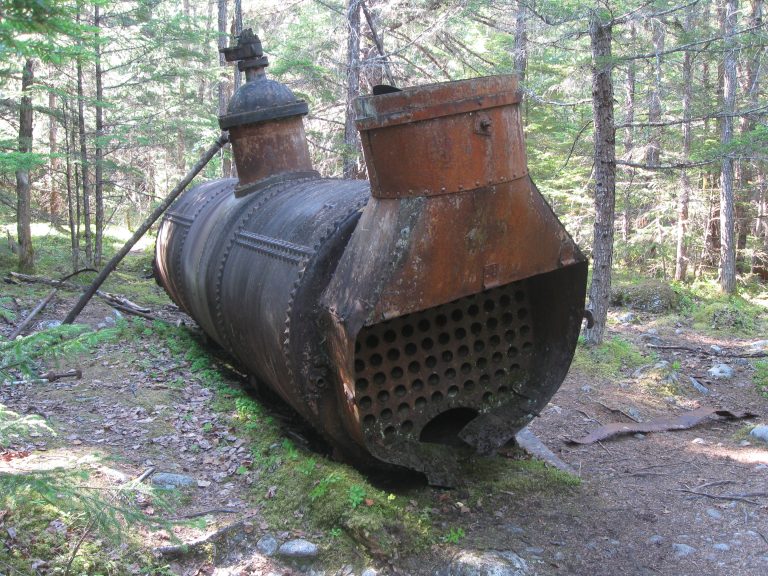
Omnibus bill brought the designation The Chilkoot Trail—made famous by the 1898 Klondike Gold Rush that lured over 100,000 miners north to Skagway and the Yukon—is now a National Historic Trail. Congress has given this unique distinction to only 19 other trails, including the Oregon Trail, the Iditarod, and the Pony Express Trail. The 33-mile trail connects Dyea, near Skagway, to Lake Bennett, British Columbia. The U.S. side is within Klondike Gold Rush National Historical Park, where visitors can take in museum exhibits, ranger-led hikes, or the abandoned boomtown of Dyea. The trail itself is popular among day-hikers and backpackers, who can see numerous artifacts left behind by prospectors. In a statement, Angela Wetz of the National Park Service said the new designation will help the park tell the story of the gold rush and the area’s natural and cultural landscapes. The park also celebrates the Alaska Native history of…
Appreciating Alaska’s parks and other public lands I live in Alaska because I was born and raised here, and it will always feel like home. But I stay in Alaska because it’s the only place on the planet with so much dramatic and varied wilderness. Alaska’s national and state parks alone total nearly 60 million acres. Some of that is right out my back door. Getting away from it all to play on public lands is as easy as hopping in my car and driving 30 minutes to a trailhead. Add a bit longer drive plus an air charter or water taxi, and I could be dropped off in the middle of nowhere to enjoy only my own company for days or weeks on end. Once out there, though, I wouldn’t really be alone, as so many wild creatures roam the land and water: grizzlies in Denali National Park and…