Kevin Johnson of Ketchikan Native Tours Kevin Johnson loves his hometown. He and his wife, Melissa, own and operate Ketchikan Native Tours, which offers hiking, sightseeing, and more, all while sharing insight into southeast Alaska’s Indigenous cultures. “We love sharing our Alaska Native heritage and our connection to the land and ocean. We’re Ketchikanites too, so we know all the little intricacies of our beautiful community. Ketchikan has a tremendous Indigenous history with our Tlingit, Haida, and Tsimshian people, and our Aleut community and World War II internment camp history. There’s Norwegian influence, too. So we have this diversity of art, religion, and industries. It’s fascinating how it all forms the community of Kichxáan, as the original Tlingit inhabitants called Ketchikan. One of my favorite spots is Totem Bight State Historical Park. It’s a collection of restored totem poles from neighboring villages and it sits right on the water with…
A surge in both residential, utility scale development continues. A growing number of Alaskans are turning to solar energy. “In the last seven years there’s been a huge uptick in grid-tied solar in homes and businesses,” says Chris Pike, research engineer at the University of Alaska Fairbanks Center for Energy and Power (ACEP), which studies solar energy at high latitudes. Pike says that solar panels were once limited to cabins or other remote sites in Alaska but have now become mainstream. He gives Alaska’s high energy costs as one reason. “People are always looking to save money,” he says, explaining that solar is increasingly competitive with other energy sources. Pike adds that while a state like Arizona can produce more solar energy, the savings on Alaska’s high energy costs can add up quicker. A well-placed solar array can pay off installation costs in a decade and the 20-year return on…
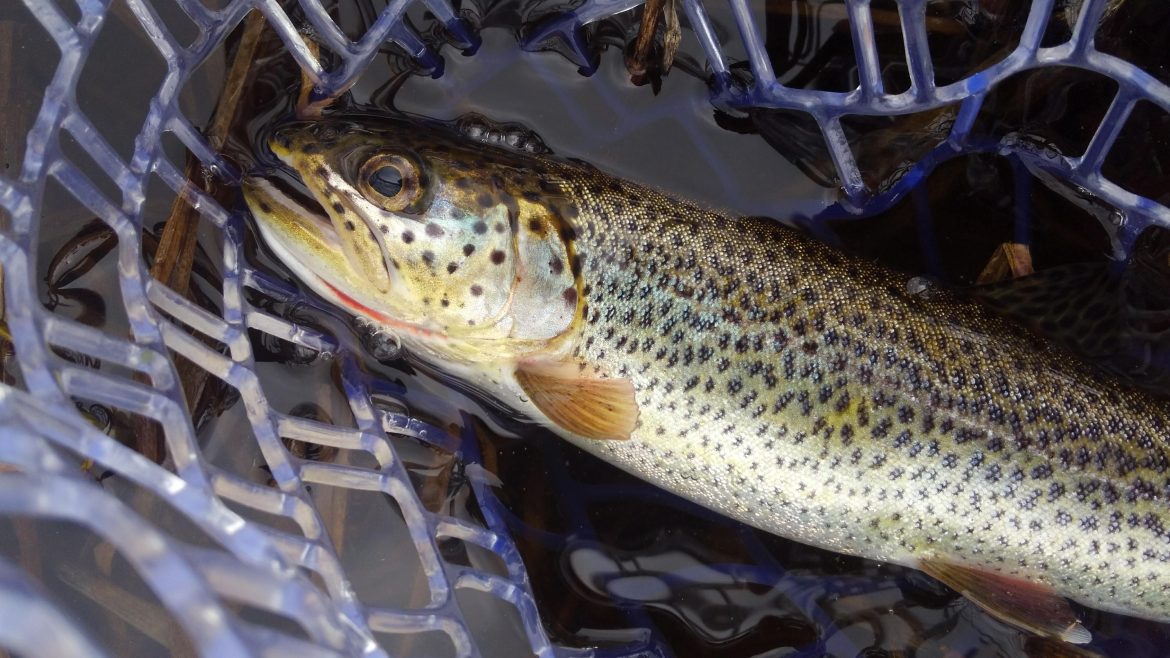
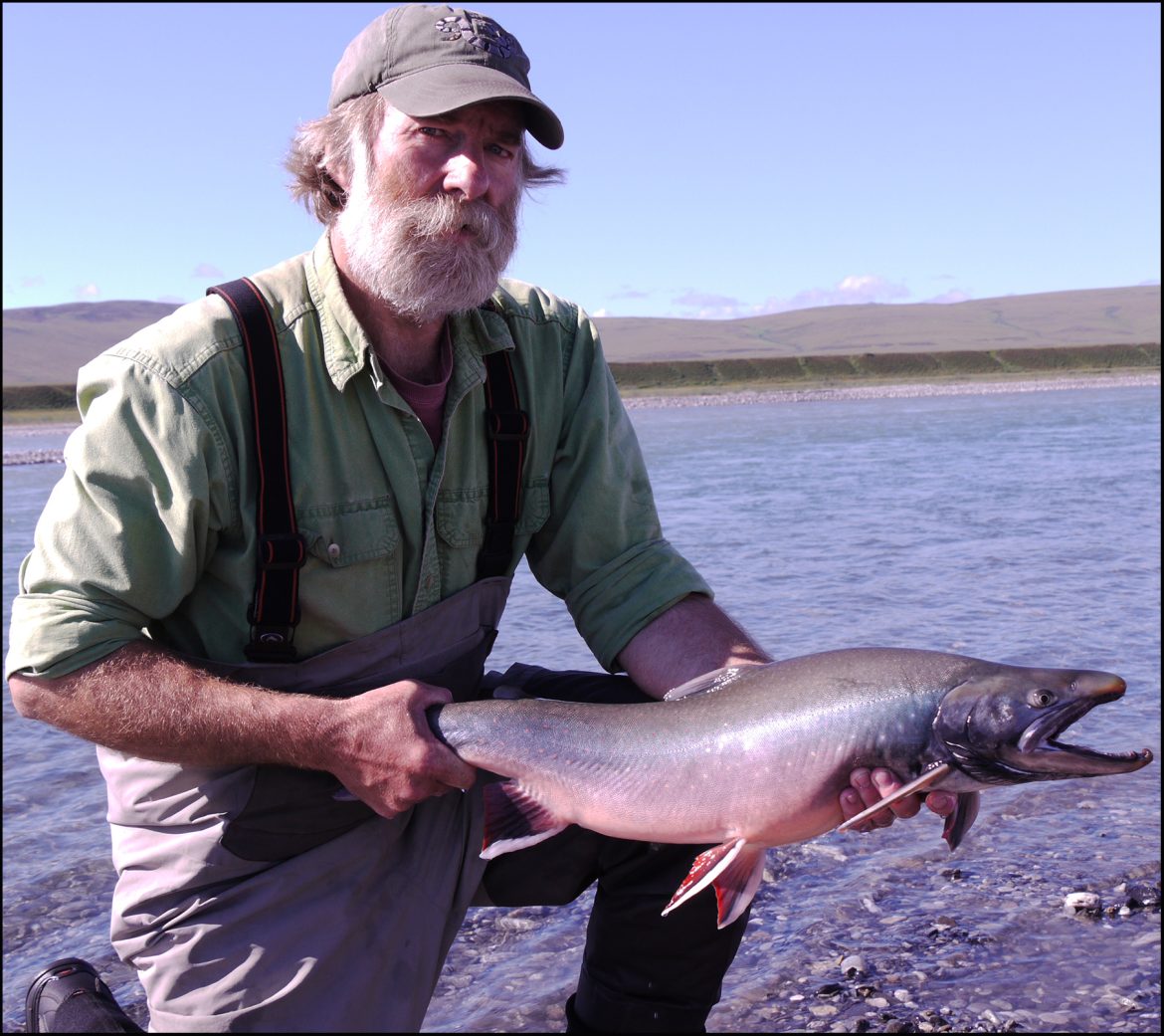
Alaska’s Other Trout by Joe Jackson Alaska is a place of fish stories. Between our abundance of Pacific salmon, whose annual runs generate staggering amounts of biological productivity for virtually everything on the food chain, along with the state’s incomprehensible quantities of pristine water, we’ve got big fish—and lots of them. It only takes a quick Google search of “Alaska fishing” to verify this. You’ll be instantly met with photos of king salmon as large as Labrador retrievers, speckled rainbow trout with not a scale out of place, Dolly Varden all colored up like clowns for the impending spawn. But one fish you probably won’t find on the internet, at least without some more pointed investigation, and one fish you most definitely won’t find featured in tourism ads, is, in my opinion, the coolest one out there: Oncorhynchus clarkii clarkii. The coastal cutthroat trout. The first time I ever fished…
Biologist and Expert on Sheefish, Whitefish, and Cabin life Randy Brown first started fishing for whitefish when he was 18, living alone on a remote tributary of the Yukon. Sheefish was tasty and healthy, and gave him a good source of protein when the salmon stopped running. After 15 years during which his main jobs consisted of hunting, fishing, and bowl-carving, Randy moved to town with his wife and two kids and studied biology at the University of Alaska Fairbanks. Today he studies sheefish, humpback whitefish, broad whitefish, and other whitefish all over interior and arctic Alaska with the U.S. Fish and Wildlife Service, ensuring these populations stay healthy for others who depend on them. —AS TOLD TO AND EDITED BY MOLLY RETTIG What brought you to Alaska when you were only 18? I grew up in Santa Fe, New Mexico, which was a great place to grow up, but…
A landslide has blocked travel since 2021 Work has started on a $100 million steel truss bridge that will bypass the Pretty Rocks landslide in Denali National Park. The slide has closed roughly half of the park’s 92-mile road since August 2021. Granite Construction is leading the project. For decades, National Park Service geologists have monitored the Pretty Rocks landslide at mile 43 of Denali’s sole access road. Its typical movement of a few inches per year caused regular but often minor road repair. But the slide accelerated in 2017, reaching nearly an inch per hour and eventually destroying the road. Scientists say dramatically warming air temperatures and increasingly heavy rainfall have deteriorated the ice and permafrost that once glued the slope together. Similar events are happening across Alaska and other high-latitude areas affected by rapid climate warming. Park superintendent Brooke Merrell says the road closure impacts work at the…
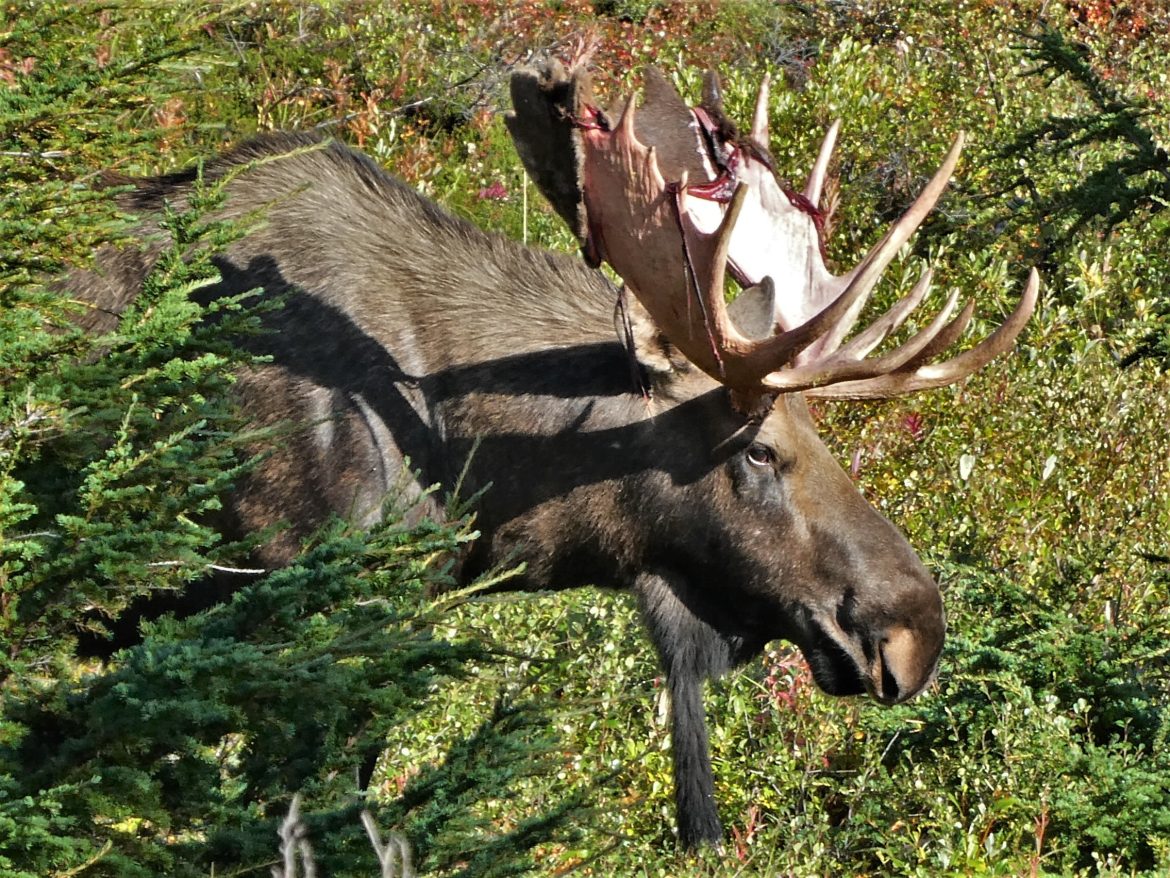
Indelible Brushes with Wildlife Unexpected encounters with wildlife are my favorite kind. Just yesterday, a moose and I startled each other on the trail. It wasn’t the wildlife viewing opportunity of a lifetime, but it was exhilarating to hear a noise, glance up, and behold that mass of shiny, brown, rippling muscle hotfooting it downhill toward me. Had I stood still, it would’ve come close, but I reacted instinctually, leaping for the scant protection of a nearby birch. My motion scared the animal and it bolted. Another time, a campground coyote slipped by almost unnoticed. I happened to see it amble across the road and alerted my boyfriend. We grabbed cameras and moseyed to where the canid had disappeared into the bushes and were surprised to see furry ears flashing in the setting sun. Wiley sat on its haunches and watched us watch, then laid down and curled its tail…
The value of exploring the unknown Coming off visiting 10 countries in six months, I’m taking a breather—for three weeks, exactly. The questions I’m asked most by friends and family are: are you back yet and where are you going next? Truth is, I get “itchy” if I’m not on the road, seeing new things, giving my brain stimulation, connecting with other cultures and fellow explorers. So, in three weeks, I’m heading to Nome, Alaska, to witness the finish of the Iditarod. Alaska might as well be another country because every part of it is unique. I’ve never been to Nome, but it feels as remote and “off the beaten path” as any destination I’ve been to so far—and that includes the end of the world in Ushuaia, Argentina, where I managed to get spit at by a guanaco and bit by a wild horse. A quick look at a…
Meet the Rodney Dangerfield of Alaskan wildlife I’m casting for a dinner along a cut bank across from camp, evening colors reflected in the Nuna’s clear, purling current. The arctic stillness is broken by a wet, resounding crash, as if a rock had just been chucked from the sky. Though startled, I’m hardly surprised by my noisy company. Floating 30 feet away, a pair of unblinking eyes set in a wet, furry head regard me, radiating curiosity-tinged indignation. I can practically hear a Disneyfied, bucktooth nasal voice: Hey buddy, what the hell you doin’ in my yard? Another tail slap followed by a shallow dive, and the head pops up closer. I’m again fixed by that beady-eyed stare. I said, beat it! and with a final slap and a swirl, it vanishes. I track the bubble trail a few dozen yards down the bank to a mound of peeled, interlocked…
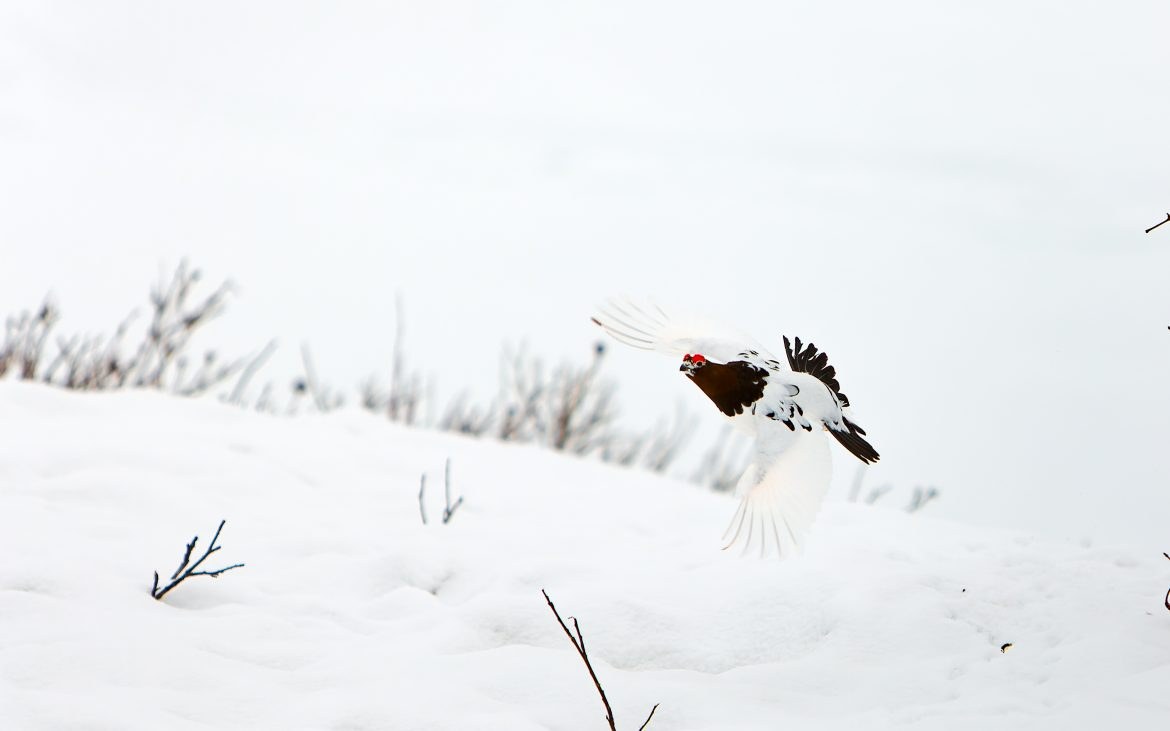
Lessons in feathers and freedom Picture it: You’re in the mountains of Alaska, out where the trail ends and the air tastes unused. You’ve forgotten what a crummy week you just had. You’ve even forgotten the cramping protests in your right thigh and the 10 miles you’ll have to hike back to the truck. Here in the mountains, you’re just an animal; a pair of lungs and a circuit of senses, raw and unfettered, living second to second. Same as the ptarmigan you so desperately chase. This was me last September. I was halfway up a scree slope on the Kenai Peninsula, and my heart was thumping like a phonebook in a dryer. I’d just flushed a handful of willow ptarmigan that cackled and flew way off into the next valley. Even though this ptarmigan flush was what I hoped to find when I set off from the trailhead with…
And into your own journey Getting off the beaten path, this issue’s theme, means different things to different people. A short hike to an overlook above a lake popular with hikers and paddlers on weekends might be all one person needs to recharge her batteries before heading back to the city. Another might think teaching students in rural Alaskan communities is sufficiently out there to qualify. Someone else might consider diving deep into frigid waters to photograph undersea creatures his blissful escape. However you frame it, getting off the main drag in Alaska is as easy or complex as you want to make it. This month, our features lead readers away from the usual to places like Naknek, Kasigluk, and Tuntutuliak in “Never a Dull Day” (page 64); a tiny cabin visited every summer in “Off-Grid in Moose Pass” (page 72); and underwater around Kodiak and Valdez in “What Lies…