Merry Christmas in Central Yup’ik By the first week of January, most Americans are taking down their Christmas decorations, but for Alaska’s thousands of Orthodox Christians, who, in keeping with the Julian calendar, celebrate Orthodox Christmas on January 7, the holiday season is just getting started. The Orthodox Church in America lists over 90 active Orthodox parishes in Alaska. Most are along the coast from the Yukon-Kuskokwim Delta southward through southeast Alaska. They are a legacy of early Russian Orthodox influence, with Alaska’s first Russian Orthodox mission established in 1794 at Kodiak. Today, Orthodox Christmas celebrations include the Ukrainian practice of “starring,” where groups travel among homes and villages to sing folk and religious songs while spinning a crafted star that represents the story of the Three Wise Men. These and other practices are often mixed with Alaska Native foods and traditions. On Saint Paul Island, for instance, Slavonic songs…

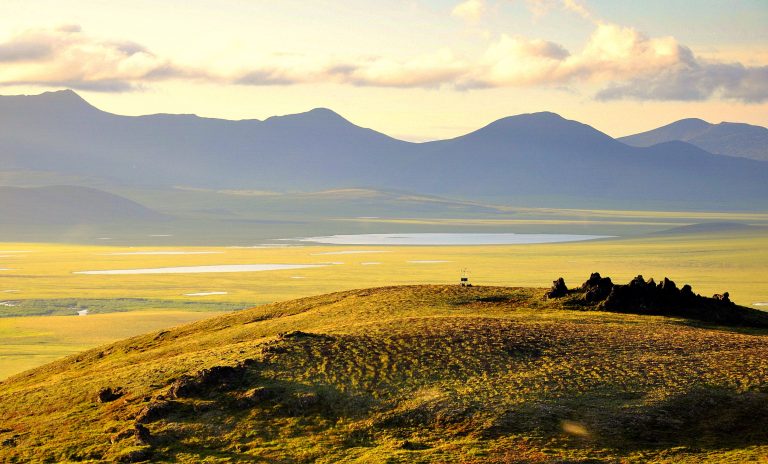
The Bitter Winter Wind Chills of Howard Pass Weather gauges that scientists installed in 2011 have recorded phenomenally cold wind chills at Howard Pass (called Akutuq in Inupiaq) in the far western Brooks Range. The pass, which sits at 1,647 feet, forms a tundra plateau between the sprawling Colville and Noatak watersheds. It lies within the Noatak National Preserve over 100 miles north of the villages of Ambler and Kobuk. Early on February 7, 2022, the weather station reported an air temperature of 43 degrees below zero and a 52-mph sustained wind speed, for a ridiculously cold wind chill of 91 below. In February 2013, the wind chill was 99.8 below. Nearly every year, scientists record wind chills colder than minus 70 at the pass. Wind speeds at Howard Pass can exceed 100 mph, especially when atmospheric pressure differences set up between Alaska’s North Slope and the state’s interior. Wind…

Past Disasters still haunt travelers “Could this whole world crack apart?” my three-year-old son asked me one day as we were walking along a beach on Coronation Island, a far-flung U.S. Forest Service designated wilderness area on the outer coast of southeast Alaska. We’d arrived here, to Egg Harbor, 90 miles south of Sitka, via our family’s small sailboat.  “Of course not,” I told him. “But right here, I mean. What if there was the biggest tsunami ever? Or an asteroid?” I raised my eyebrows at him. “What makes you ask?” Admittedly, our position looked precarious from a distance—on one side of us was an archipelago boasting some of the densest brown bear populations in the world; on the other was the North Pacific, whose fetch is intimidating even on a good day. If there ever was a part of the world that might swallow a person, this fit the…

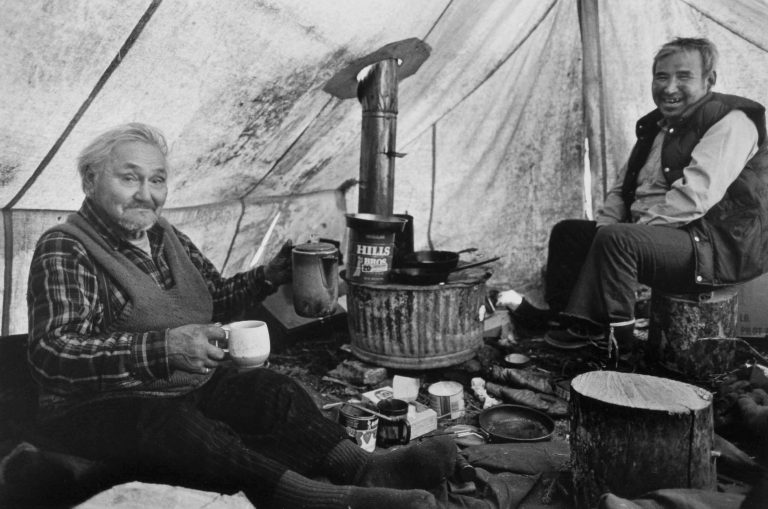
By photographer James H. Barker The following pages present a tiny fraction of the extensive body of work (largely focused on Alaska Native peoples) created by legendary Fairbanks photographer James H. Barker. Now in his mid-80s, Barker was recently honored as the Rasmuson Foundation’s 2022 Distinguished Artist, the first photographer to receive the prestigious award. His photos, reproduced here from Always Getting Ready: Upterrlainarluta: Yup’ik Eskimo Subsistence in Southwest Alaska, are the result of 18 years spent capturing the intimate moments of the people of the Yukon-Kuskokwim Delta to give viewers a glimpse of Native life. Over those years, Barker joined his Yup’ik friends and subjects on whale hunts and trapping trips, in steam baths, and at fishcamp. Though each image represents a single, frozen instant, Barker’s work transcends the individual moment to reveal universal beauty and connection. See more of his work at jamesbarker-photography.com. —Michelle Theall

Young Inupiaq captains provide food for their community Text by Molly Maqpee Lane, Images by Nathaniel Wilder Time stands still when you catch a bowhead whale. Meetings are canceled, work is forgotten about, chores go undone, the kids don’t go to school, and sleep is out of the question.  The only focus is on harvesting the giant mammal. Sometimes it can take hours, sometimes it takes days to put away. It’s such a joyous time that it doesn’t feel like work. Thomas Edison once said, “I never did a day’s work in my life. It was all fun.” That is what whaling is all about. I am from Point Hope, Alaska. It is the oldest continuously inhabited region in North America. We have always been an Inupiaq subsistence community. Thanksgiving of 2022, my in-laws Jacob and Della Lane Jr. passed down their whaling crew to my husband, Jacob Lane III,…

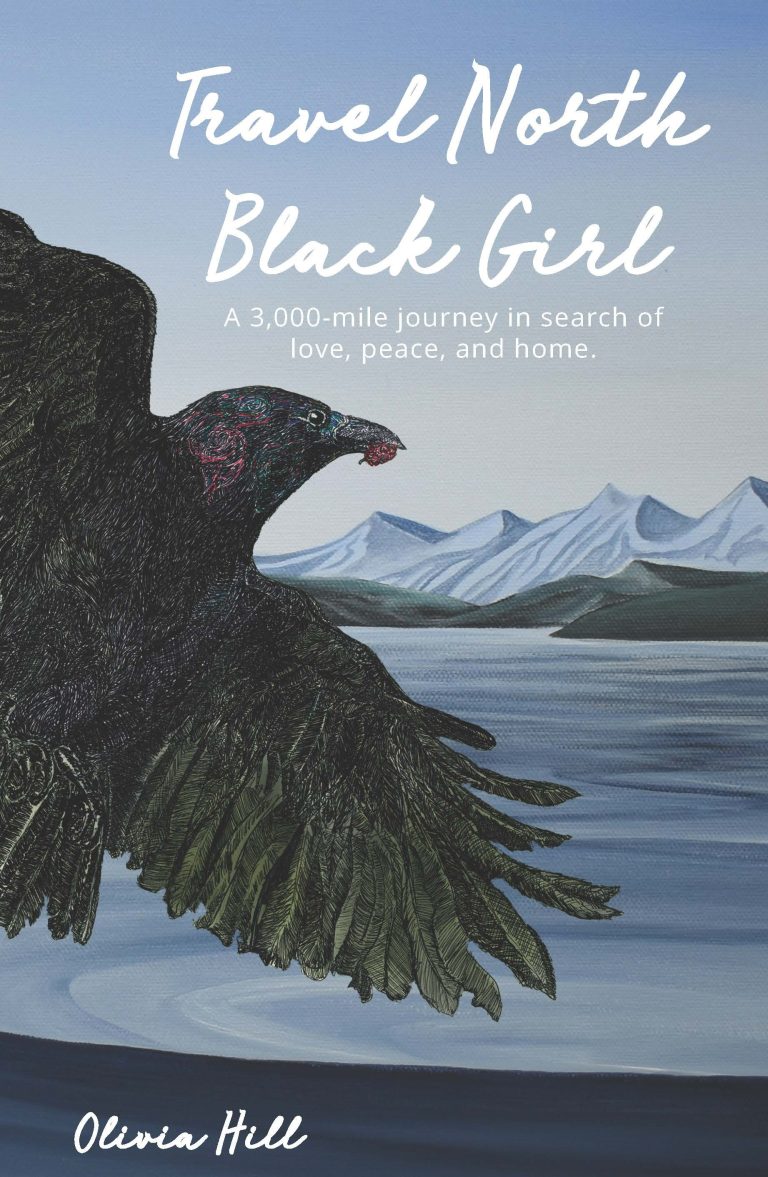
A 3,000-mile journey in search of love, peace, and home by Olivia Hill The edited excerpt below is printed with permission by Olivia Hill and Woodneath Press. It’s taken from her memoir reflecting on living as a Black woman in an Alaska Native village in the 1980s juxtaposed with her own cultural upbringing. I knocked on the door, and a partially naked woman opened. “You don’t have to knock, come in, no men around.” They laughed shyly and smiled. “We run them off … You like sweat, bathe, ah? … We like it hot, first one we do this year now it’s cold … Put your clothes there then come in quick.” They disappeared through another door while I took off my clothes, slowly piece by piece, and hung them on the pegs made from birch tree limbs. This small outer room had wooden benches with space to slide your…

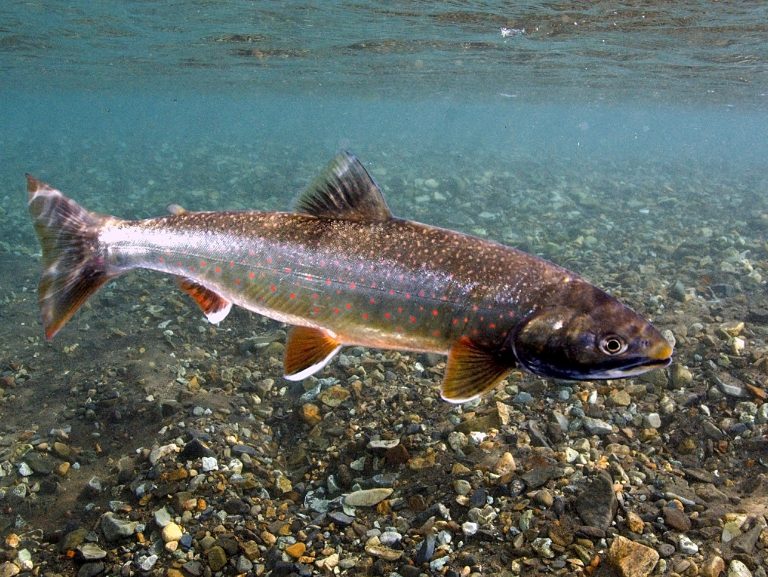
A hidden gem on the Middle Kuskokwim by John Chythlook Note: This article is reprinted with permission from the Alaska Department of Fish and Game’s ReelTimes newsletter. Additional species information is also from ADF&G. Ever thought of fishing a little-traveled river in the middle Kuskokwim River drainage? If so, a trip on the Hoholitna River should near the top of your list. The Hoholitna River is a tannic, clearwater river that flows 165 miles north from its headwaters in Whitefish Lake in the Nushagak Hills to eventually join the lower Holitna River. There is excellent fishing for Dolly Varden and arctic grayling, as well as large, voracious northern pike in the lower river and sloughs all summer long. King and chum salmon are available late June and July, while coho salmon are present during late August and September. Anglers normally access the lower Hoholitna by chartered boat from the village of Sleetmute.…

Following the old timers’ trail I pulled alongside my traveling partner Clarence Wood. Following his lead, I tapped my snowmachine’s kill switch. Break time. As I unscrewed the cap of my thermos and poured steaming cups of coffee for us both, melting snow hissed on our mufflers. The upper Redstone valley stretched northward into a blue-white ache. Ahead lay Iviisaq Pass, known for its terrain-driven winds; and beyond, an expanse of treeless, unpeopled country, not so much as an inhabited cabin until the village of Anaktuvuk Pass, 200 more miles to the northeast. Our laden sleds, the sort once pulled by dogs, bore gas, food, and gear to sustain us for nearly double that distance. This was our first break since we’d set out from our village of Ambler, on the upper Kobuk, outward bound on a great loop that would carry us to Anaktuvuk, south to the Koyukuk, then…

Reluctant Alaskan hero by Ray Cavanaugh Wrangel Island was never a place people would visit unless they had a really good reason. Technically part of Russia, it’s some 300 miles north of the Arctic Circle and almost as many miles away from the Alaskan coast. It tended to attract young men seeking adventure, danger, and perhaps some personal glory. For the first two, the island was a safe bet. The glory part, however, proved rather more elusive, often fatally so. This hostile piece of territory, with far more polar bears than people, had managed to become a source of international controversy, with Russians, Americans, and Canadians at different points making claims for their homeland. All this was far outside the thoughts of Ada Blackjack, until a set of life circumstances placed her directly on Wrangel’s icy surface and forever linked her name to its formidable legacy. An Alaskan Inupiat, Ada…

NOTE: Map is reprinted with permission from Travel Alaska (travelalaska.com) and Alaska Native Heritage Center (alaskanative.net); edited text is courtesy of Travel Alaska. IÑUPIAQ & ST. LAWRENCE ISLAND YUPIK The Iñupiaq and the St. Lawrence Island Yupik people call themselves the “Real People.” Their homeland covers Alaska’s northern Arctic region, remote and diverse, and accessible primarily by plane. Filled with an amazing array of wildlife and a landscape ranging from coastline to tundra, Alaska Natives here rely on subsistence. SUGPIAQ & UNANGAX The southwest region’s coastal communities and archipelago are defined by rugged shoreline and terrain. Having long depended on the sea for survival, water is central to the Unangax̂ and Sugpiaq way of life. Their homeland stretches from Prince William Sound to Kodiak Island and along the 1,200-mile-long Aleutian Islands Chain. TLINGIT, HAIDA, EYAK, & TSIMSHIAN The southeastern panhandle is home to the Tlingit, Haida, Eyak, and Tsimshian.…